
7 Actionable Strategies for Growth Marketing in 2025
Over 60 percent of all internet traffic now comes from mobile devices, changing the way American businesses approach digital marketing. In this fast-paced environment, old tactics simply cannot keep up with real-time consumer demands. By tapping into rapid experiment tools and leveraging immediate feedback, marketers can drive measurable results faster than ever before. Discover practical techniques that help organizations test smarter, personalize campaigns at scale, and stay ahead in the fiercely competitive American digital market.
Table of Contents
- Leverage Real-Time A/B Testing For Fast Decision Making
- Utilize Dynamic Keyword Insertion For Personalized Content
- Implement Lightweight Tools To Improve Site Speed
- Adopt No-Code Solutions For Easy Experimentation
- Track Advanced Goals With Clear Analytics
- Incorporate Real User Feedback For Campaign Refinement
- Optimize Journeys For Mobile-First User Experience
Quick Summary
| Key Insight | Explanation |
|---|---|
| 1. Use Real-Time A/B Testing | Real-time A/B testing allows quick decisions based on live data, improving marketing effectiveness immediately. |
| 2. Personalize Content with Dynamic Keyword Insertion | Tailor messaging to user characteristics to enhance engagement and conversion through relevant content. |
| 3. Optimize for Mobile Experience | Implement responsive design and simplify navigation to cater to mobile users, improving user engagement significantly. |
| 4. Collect and Utilize Real User Feedback | Gathering direct user insights enhances campaign strategies and fosters deeper audience connections. |
| 5. Track Advanced Goals in Analytics | Establish metrics that reflect business objectives to better understand user behavior and improve marketing efforts. |
1. Leverage Real-Time A/B Testing for Fast Decision Making
In the high-speed world of digital marketing, waiting for results is no longer an option. Real-time A/B testing allows you to make lightning-fast decisions that can dramatically improve your marketing performance.
Traditional A/B testing methods often involve waiting weeks or months to gather meaningful data. However, advanced techniques like Bayesian batch bandit algorithms now enable marketers to dynamically allocate traffic and swiftly identify the most effective variants. These sophisticated approaches help you understand what works almost instantly.
The core power of real-time A/B testing lies in its ability to adapt quickly. Instead of committing to a single variant, you can continuously adjust your strategy based on live performance data. By disentangling causal effects through matched synthetic control groups, you can make more reliable decisions without extensive waiting periods.
To implement real-time A/B testing effectively, start by selecting a robust testing platform that offers immediate statistical analysis. Focus on testing one variable at a time, whether it's a headline, button color, or call-to-action placement. Set clear metrics for success before launching your test, and be prepared to pivot quickly based on emerging insights.
Pro tip: Create a decision matrix beforehand that outlines exact thresholds for changing your marketing strategy based on real-time test results, ensuring you can act swiftly and confidently when data signals a clear winner.
2. Utilize Dynamic Keyword Insertion for Personalized Content
Personalization is no longer a luxury but a necessity in modern digital marketing. Dynamic keyword insertion allows you to craft content that speaks directly to your audience by automatically tailoring messaging to individual user characteristics and search intent.
Researchers have demonstrated how AI-based adaptive content systems can dramatically improve engagement by dynamically adjusting keywords and content presentation. This approach transforms generic marketing materials into highly targeted communication that resonates with specific audience segments.
Implementing dynamic keyword insertion requires a strategic approach. Start by segmenting your audience based on demographics, behavior, and past interactions. Create a comprehensive keyword database that reflects different user personas and their potential search queries. Then leverage marketing automation tools that can swap keywords in real time based on user data.
For example, an ecommerce website could dynamically change product descriptions from "running shoes" to "trail running shoes" for users who have previously searched outdoor fitness content. This level of personalization increases relevance and significantly boosts conversion potential.
Pro tip: Build a flexible keyword matrix that includes primary and secondary keyword variations, allowing your content to adapt seamlessly across different user segments and search contexts.
3. Implement Lightweight Tools to Improve Site Speed
In the digital world, every millisecond counts. Implementing lightweight tools can dramatically transform your website's performance and user experience by reducing load times and improving overall site responsiveness.
Research demonstrates that strategic optimization of web resources can significantly enhance site speed, directly impacting user engagement and search engine rankings. Lightweight tools are essential for marketers who want to create fast, efficient websites that keep visitors interested and reduce bounce rates.
The key is to select tools that provide maximum functionality with minimal performance overhead. Start by auditing your current website tools and eliminating any unnecessary scripts or plugins. Look for alternatives that offer compressed file sizes, efficient coding, and minimal external dependencies. Focus on tools that provide critical functionality without bloating your website's infrastructure.
Some practical strategies include using lightweight content delivery networks, minimizing JavaScript and CSS files, implementing browser caching, and choosing minimalist design frameworks. Modern conversion rate optimization tools prioritize speed as a critical metric for improving overall website performance.
Pro tip: Create a performance budget that sets strict limits on file sizes and load times, and regularly test your website using tools like Google PageSpeed Insights to ensure you maintain optimal site speed.
4. Adopt No-Code Solutions for Easy Experimentation
Growth marketers no longer need advanced coding skills to run sophisticated experiments. No-code solutions have revolutionized digital marketing by enabling rapid testing and iteration without technical barriers.
Rapid experimentation platforms now allow teams to implement changes swiftly without relying on developers, dramatically reducing the time and resources required to test new marketing strategies. These tools empower marketers to become more autonomous and responsive to market dynamics.
To successfully adopt no-code solutions, start by identifying your primary experimentation goals. Look for platforms that offer visual editors, drag-and-drop interfaces, and integrated analytics. These tools should allow you to modify landing pages, create A/B tests, and track performance without writing a single line of code.
Key considerations include ease of use, integration capabilities, and real-time reporting features. Prioritize solutions that provide intuitive interfaces and comprehensive analytics dashboards. Marketers can now quickly test headline variations, adjust call-to-action buttons, and modify page layouts with minimal technical expertise.
Pro tip: Create a quarterly experimentation roadmap before selecting a no-code tool, ensuring the platform you choose aligns perfectly with your specific marketing objectives and experimental strategies.
5. Track Advanced Goals with Clear Analytics
Growth marketing success hinges on understanding precisely what drives user behavior. Advanced goal tracking transforms raw data into strategic insights that can revolutionize your marketing approach.
Best practices in experimental analytics emphasize the importance of defining clear, measurable goals that go beyond simple conversion metrics. This means moving past surface level measurements to understand the deeper customer journey and interaction patterns.
Implementing advanced goal tracking requires a strategic approach. Start by identifying key performance indicators that truly reflect your business objectives. These might include metrics like customer lifetime value, engagement depth, feature adoption rates, or cross platform user interactions. Utilize tools that allow multi dimensional tracking and provide granular insights into user behavior.
Effective goal tracking involves creating a comprehensive analytics framework that captures nuanced user interactions. This means setting up complex conversion funnels, tracking micro conversions, and understanding the indirect paths users take before making a final purchase or commitment.
Pro tip: Develop a goal hierarchy that differentiates between primary and secondary objectives, allowing you to understand both immediate performance and long term user engagement trends.
6. Incorporate Real User Feedback for Campaign Refinement
Successful marketing is a dialogue not a monologue. Real user feedback serves as the critical compass that guides your campaign strategy towards meaningful engagement and conversion.
A/B testing analytics demonstrate the profound impact of incorporating direct user insights into marketing campaigns. By listening carefully to your audience, you transform generic strategies into highly targeted experiences that resonate deeply.
Implementing user feedback requires a systematic approach. Begin by creating multiple feedback collection channels like surveys, user interviews, session recordings, and direct customer interaction platforms. Look beyond surface level responses and dig into the emotional and practical motivations driving user behavior. Analyze both quantitative metrics and qualitative narratives to build a comprehensive understanding of your audience.
Effective feedback incorporation means treating user input as a strategic asset. Break down feedback into actionable segments like user experience challenges, product feature requests, and communication preferences. Use these insights to continuously refine your messaging, design, and overall marketing approach.
Pro tip: Develop a standardized feedback scoring system that categorizes user suggestions by potential impact and ease of implementation, allowing you to prioritize refinements that deliver maximum value with minimal resource investment.
7. Optimize Journeys for Mobile-First User Experience
With over 60% of internet traffic now coming from mobile devices, creating seamless mobile experiences isn't just an option its a fundamental marketing requirement. Mobile optimization determines whether users engage with your content or bounce away in frustration.
Mobile-specific A/B testing strategies provide critical insights into creating optimal user journeys that adapt dynamically to different screen sizes and user behaviors. Understanding how users interact with your content on mobile devices becomes the key to successful digital marketing.
Optimizing mobile journeys requires a comprehensive approach. Start by implementing responsive design principles that automatically adjust layout, image sizes, and interactive elements based on device characteristics. Focus on simplifying navigation, reducing load times, and creating touch friendly interfaces that work effortlessly across smartphones and tablets.
Practical mobile optimization involves testing multiple elements like button sizes, form designs, and content hierarchy. Prioritize clean, scannable layouts with minimal text and high contrast visuals. Ensure that critical call to action buttons are easily tappable and positioned intuitively for thumb navigation.
Pro tip: Create a mobile specific performance benchmark that tracks key metrics like tap through rates, scroll depth, and conversion speed, allowing you to continuously refine and improve your mobile user experience.
Below is a comprehensive table summarizing various strategies and techniques in digital marketing discussed throughout the article.
| Strategy | Implementation | Expected Results |
|---|---|---|
| Real-Time A/B Testing | Utilize Bayesian batch bandit algorithms and synthetic control groups to quickly adapt strategies. | Fast decision-making and immediate performance improvements. |
| Dynamic Keyword Insertion | Segment audiences and use AI for real-time keyword adaptation based on user data. | Increased personalization, higher engagement, and conversion rates. |
| Lightweight Tools for Site Speed | Audit tools, use compressed files, and implement caching. | Improved site speed and user engagement with reduced bounce rates. |
| No-Code Solutions | Employ platforms with visual editors for rapid experimentation without coding. | Quick adaptations and testing autonomy for marketers. |
| Advanced Goal Tracking | Define clear KPIs, set up complex funnels, and track micro conversions. | Deeper insights into user journeys and better strategic alignment. |
| Real User Feedback | Collect user insights through multiple channels and score feedback for actionability. | Campaign refinement and more targeted marketing strategies. |
| Mobile-First User Experience | Optimize designs for responsiveness and simplify navigation for mobile devices. | Enhanced user experience on mobile, leading to higher engagement. |
Accelerate Your Growth Marketing with Stellar's Lightning-Fast A/B Testing Solutions
The article "7 Actionable Strategies for Growth Marketing in 2025" highlights critical challenges that marketers face today: the need for real-time decision making, dynamic keyword insertion, mobile-first optimization, and a no-code platform that makes experimentation easy and fast. These pain points are exactly what Stellar is engineered to solve. With its ultra-lightweight 5.4KB script, Stellar ensures your website stays fast and responsive while delivering powerful features like advanced goal tracking and a visual editor built specifically for growth marketers who want quick, actionable insights.
Using a solution like Stellar helps you break free from waiting weeks for results. Instead, you can dynamically optimize your campaigns based on live data and personalized user signals. This seamless integration of performance and simplicity makes it perfect for small to medium-sized businesses eager to stay ahead in their growth marketing journey.
Take control of your marketing experiments today with Stellar.
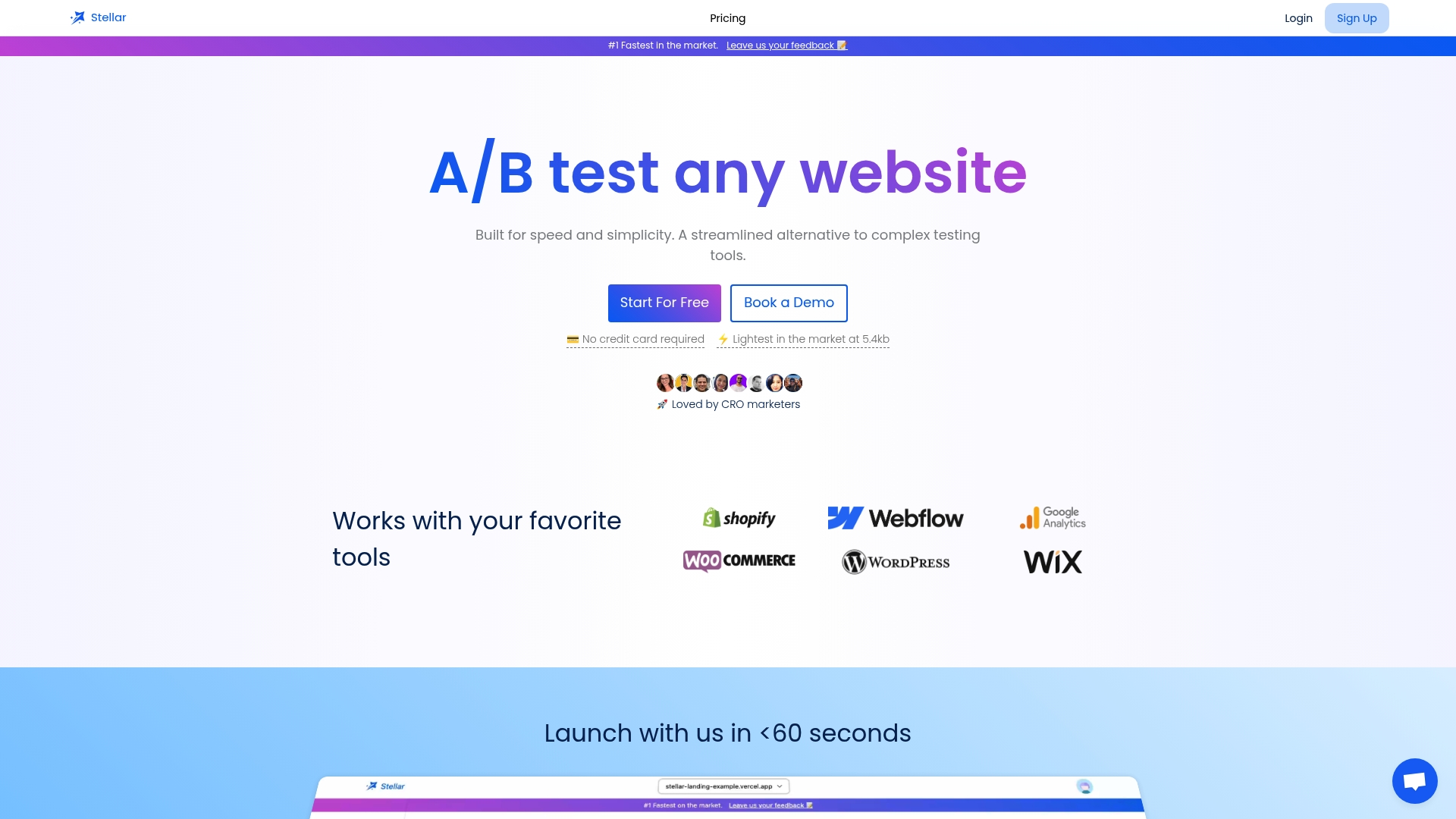
Ready to boost your conversion rates and refine your campaigns faster than ever before? Explore how Stellar empowers marketers like you to implement the strategies in this article effortlessly by visiting Stellar A/B Testing Platform. Discover our no-code visual editor and unlock real-time analytics that transform your data into confident decisions. Act now – start your free plan designed for businesses with under 25,000 monthly tracked users at https://gostellar.app and see your growth marketing soar.
Frequently Asked Questions
How can I implement real-time A/B testing in my marketing strategy?
Real-time A/B testing can be implemented by selecting a testing platform that provides immediate statistical analysis. Start by testing one variable at a time, like a headline or button color, and be ready to adjust your approach based on the data you gather within a short timeframe.
What are some effective ways to use dynamic keyword insertion for personalized content?
To utilize dynamic keyword insertion, segment your audience based on their characteristics and past interactions. Create a keyword database that reflects these segments, allowing you to automatically adjust messaging that resonates with users, thereby increasing relevance and improving conversion rates.
What lightweight tools should I consider to improve my website's speed?
Consider using lightweight tools that maximize functionality with minimal performance overhead. Start by auditing your current tools, removing unnecessary scripts, and integrating alternatives that compress file sizes and improve load time, aiming to reduce page load times by 20-30%.
How can I adopt no-code solutions for experimentation without coding knowledge?
Begin by identifying your experimentation goals and look for no-code platforms that offer visual editors and drag-and-drop functionality. These tools will allow you to modify landing pages and run A/B tests quickly, enabling experimentation without any coding skills needed.
What should I track to measure advanced marketing goals effectively?
To measure advanced marketing goals, focus on key performance indicators that align with business objectives, such as customer lifetime value and engagement depth. Set up a detailed analytics framework that tracks these metrics, allowing you to understand user behavior comprehensively and refine your strategies accordingly.
How do I collect and use real user feedback to refine campaigns?
Start by implementing multiple channels for collecting user feedback, such as surveys and interviews. Analyze both qualitative and quantitative data to understand user motivations, and use these insights to make data-driven improvements to your marketing campaigns.
Recommended
Published: 12/23/2025