
Content Optimization for Engagement: Strategies That Work
Most American e-commerce teams struggle to convert visitors into loyal shoppers, yet studies show that over 60 percent of users bounce due to poor content engagement. Staying competitive means more than just publishing regular updates. Effective content optimization can transform your brand presence, maximize audience retention, and simplify growth without technical headaches. Discover clear strategies to help your business connect with users and outperform the competition.
Table of Contents
- Defining Content Optimization For Engagement
- Personalization And Dynamic Keyword Strategies
- A/B Testing And Visual Editor Approaches
- Measuring Success With Analytics And Goals
- Common Pitfalls And How To Avoid Them
Key Takeaways
| Point | Details |
|---|---|
| Content Optimization | Focus on improving digital content through keyword research, readability, and user experience to enhance audience engagement. |
| Personalization | Leverage dynamic keyword strategies and audience segmentation to create tailored content experiences that resonate more effectively with users. |
| A/B Testing | Utilize A/B testing to make data-driven decisions for content performance, ensuring that changes lead to measurable improvements. |
| Avoid Common Pitfalls | Be mindful of balancing technical SEO with content quality to avoid disengagement and maximize optimization effectiveness. |
Defining Content Optimization for Engagement
Content optimization is a strategic process designed to enhance digital content's performance and user engagement. At its core, it involves systematically improving digital assets to attract, retain, and convert audience attention. Content optimization techniques aim to create high-value experiences that meet both audience expectations and search engine requirements.
The fundamental goal of content optimization goes beyond simply creating content. It involves carefully analyzing and refining content elements to maximize visibility, relevance, and audience interaction. This means examining factors like keyword usage, readability, structural design, and user experience. Search engines increasingly prioritize content that demonstrates genuine value, which means optimization must focus on substantive improvements rather than superficial adjustments.
Successful content optimization requires a multifaceted approach. Key strategies include understanding audience intent, conducting thorough keyword research, improving readability, and ensuring technical accessibility. By adapting content for search engine discoverability, marketers can create digital assets that not only rank well but also genuinely engage readers. This involves balancing technical optimization with high-quality, meaningful content that addresses user needs.
Pro tip: Regularly audit your content using analytics tools to identify optimization opportunities and track performance metrics that indicate genuine user engagement.
Here's a comparison of key content optimization methods and their primary benefits:
| Optimization Method | Description | Primary Benefit |
|---|---|---|
| Keyword Research | Analyze search terms and intent | Increased discoverability |
| Personalization | Tailor content for specific users | Higher engagement rates |
| A/B Testing | Test content variations scientifically | Improved conversion rates |
| Visual Editor Optimization | Edit design elements quickly | Faster content updates |
Personalization and Dynamic Keyword Strategies
Personalization in digital marketing represents a powerful approach to creating targeted, resonant content experiences. Effective keyword strategies require a nuanced understanding of how specific phrases connect with audience intent and search behaviors. By carefully selecting and integrating keywords that reflect user needs, marketers can craft content that feels uniquely tailored and immediately relevant.
Successful dynamic keyword strategies involve more than simple repetition. Modern approaches focus on understanding user intent, segmenting audiences, and creating flexible content frameworks that adapt to different user profiles. Targeting both broad and long-tail keywords allows marketers to capture diverse search intents and provide more comprehensive content experiences. This means developing content that can dynamically adjust its language, recommendations, and messaging based on user characteristics like location, browsing history, or previous interactions.
The technical implementation of personalization requires sophisticated data collection and analysis. Advanced marketers use machine learning algorithms and real-time data processing to create content that shifts contextually. This might involve changing headline text, recommending different product sections, or presenting customized call-to-action messages based on individual user signals. The goal is creating a fluid, responsive content experience that feels intuitive and individually crafted.

Pro tip: Implement progressive profiling techniques to gradually collect user data and refine personalization strategies without overwhelming users with intrusive information requests.
A/B Testing and Visual Editor Approaches
A/B testing strategies represent a systematic method for understanding user preferences and optimizing digital content performance. By comparing two distinct versions of a webpage, marketers can scientifically determine which elements drive better engagement, conversion rates, and overall user experience. This approach transforms guesswork into data-driven decision making, allowing teams to make precise improvements based on actual user behaviors.
Visual editors play a crucial role in simplifying the A/B testing process. These intuitive interfaces enable marketers to create content variations without requiring advanced coding skills. Modern visual editors allow rapid manipulation of critical elements like headlines, images, button colors, and page layouts. Systematic content testing helps teams quickly identify which design choices resonate most effectively with their target audience, reducing the time and resources traditionally needed for comprehensive website optimization.

Successful A/B testing goes beyond simple visual comparisons. Advanced strategies involve deep audience segmentation, multivariate testing, and sophisticated tracking of user interaction metrics. Marketers must consider factors like user demographics, device types, and behavioral patterns when designing experiments. This nuanced approach ensures that optimization efforts are not just statistically significant, but also contextually relevant and aligned with specific audience expectations.
Pro tip: Always establish clear, measurable goals before launching an A/B test and ensure you have sufficient traffic to generate statistically meaningful results.
Measuring Success With Analytics and Goals
Content optimization metrics provide critical insights into digital performance, transforming raw data into actionable strategic intelligence. By tracking comprehensive engagement indicators, marketers can understand exactly how audiences interact with digital content, revealing nuanced patterns of user behavior that drive informed decision making. These metrics go far beyond simple page views, diving deep into user experience and content effectiveness.
Advanced analytics platforms enable sophisticated goal tracking across multiple dimensions. Marketers can now analyze complex user journeys, mapping interactions from initial contact through final conversion. Search ranking and conversion metrics help teams understand not just how users engage, but precisely where and why they take specific actions. This granular approach allows for pinpoint optimization of content strategies, ensuring each element is carefully calibrated to maximize audience engagement.
Successful analytics implementation requires a strategic framework of predefined, measurable objectives. Key performance indicators should align directly with broader business goals, creating a clear connection between content performance and organizational outcomes. Teams must develop robust tracking mechanisms that capture both quantitative data points like click-through rates and qualitative insights such as user sentiment and interaction quality. This holistic approach transforms analytics from a reporting exercise into a powerful strategic tool for continuous improvement.
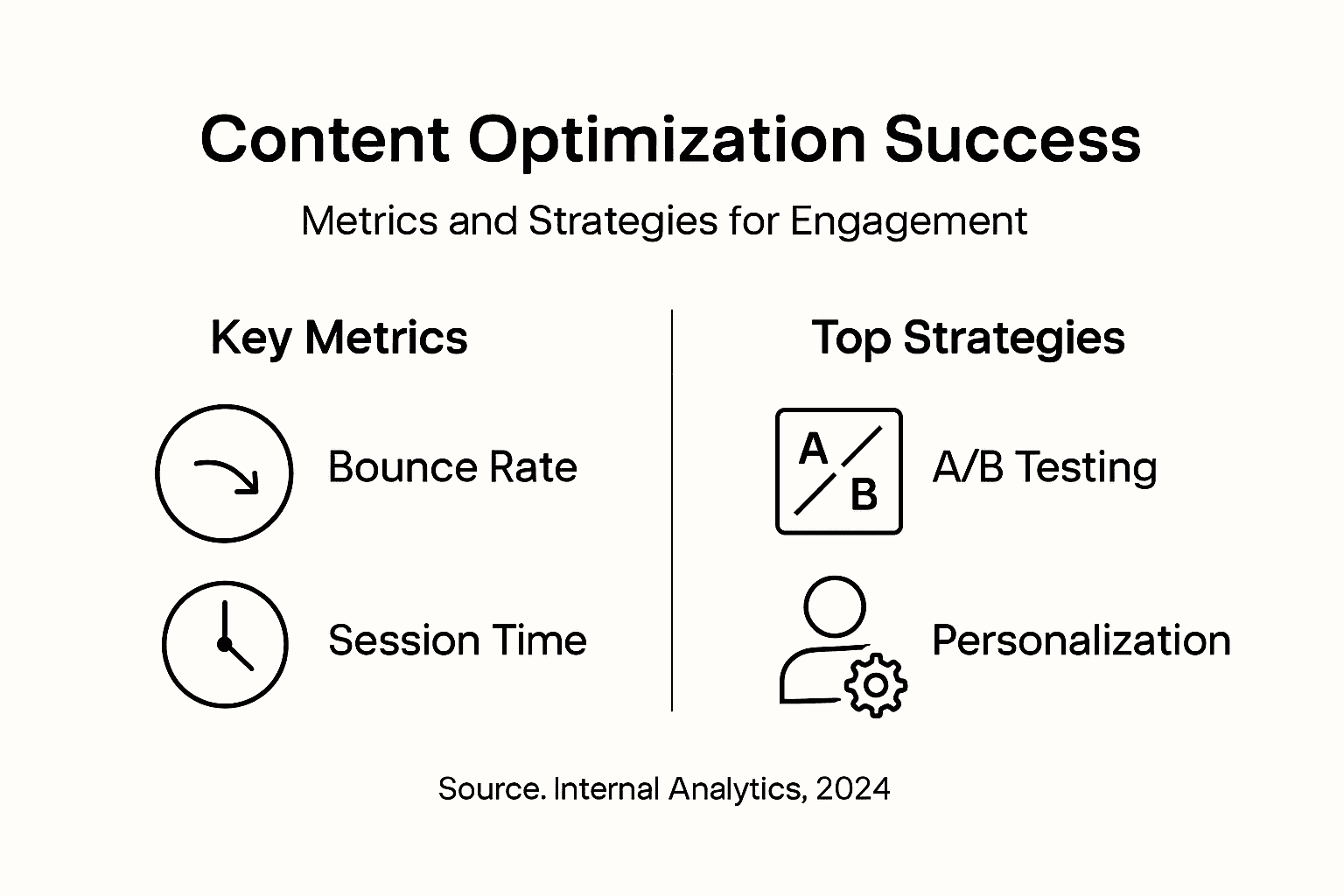
Pro tip: Establish a consistent baseline of key metrics before implementing changes, allowing you to accurately measure the impact of each optimization effort.
Below is a summary of essential analytics metrics and what they reveal about content effectiveness:
| Metric | What It Measures | Strategic Insight Provided |
|---|---|---|
| Bounce Rate | Users leaving after one page | Content relevance and quality |
| Conversion Rate | Percentage of visitors acting | Effectiveness of call-to-action |
| Time on Page | Average duration per user | Content engagement level |
| Click-Through Rate | Frequency of link clicks | Success of structure and placement |
Common Pitfalls and How to Avoid Them
Content optimization mistakes can significantly undermine digital marketing efforts, transforming potentially successful strategies into costly failures. Marketers must remain vigilant about recognizing and proactively addressing common pitfalls that can derail content performance. Understanding these critical errors allows teams to develop more robust, effective optimization approaches that genuinely resonate with target audiences.
One of the most prevalent challenges involves balancing technical optimization with authentic content quality. Keyword stuffing, over-optimization, and neglecting user intent can trigger immediate audience disengagement. Advanced marketers recognize that strategic keyword integration requires a nuanced approach that prioritizes natural language and genuine value. This means selecting keywords strategically, embedding them organically, and maintaining content readability and user experience.
Technical SEO elements often represent another critical area of potential failure. Marketers must pay careful attention to technical aspects like page load speed, mobile responsiveness, metadata optimization, and structured content design. Neglecting these foundational elements can create significant barriers to user engagement, regardless of how compelling the content might initially appear. Successful optimization requires a holistic approach that considers both creative and technical dimensions of digital content performance.
Pro tip: Conduct a quarterly content audit to systematically identify and address potential optimization weaknesses before they significantly impact overall performance.
Unlock Peak Engagement With Powerful Content Optimization Tools
Are you struggling to balance authentic content quality with seamless user experience as highlighted in the article on Content Optimization for Engagement The challenge of conducting effective A/B testing while personalizing dynamic keywords and tracking advanced goals demands a solution designed for marketers like you Stellar offers an intuitive platform tailored to small and medium-sized businesses looking to boost engagement and conversions without technical hassles

Experience Stellar’s lightweight no-code Visual Editor that empowers quick content variations supported by real-time analytics to inform data-driven decisions Use dynamic keyword insertion to deliver personalization at scale and advanced goal tracking to measure what truly matters Don't wait to transform guesswork into measurable success Visit Stellar’s platform now and start optimizing your digital content strategy with ease and speed
Frequently Asked Questions
What is content optimization?
Content optimization is the strategic process of enhancing digital content's performance and user engagement. It involves improving elements like keyword usage, readability, and user experience to attract and retain audience attention.
How can I effectively conduct keyword research for content optimization?
To conduct effective keyword research, analyze search terms and audience intent to find keywords that align with user needs. Utilize tools and resources to identify both broad and long-tail keywords that can enhance discoverability and create relevant content.
What are the benefits of A/B testing in content optimization?
A/B testing allows marketers to compare two versions of a webpage to determine which one performs better in terms of engagement and conversion rates. This data-driven approach eliminates guesswork and helps refine content strategies based on actual user behavior.
How do I measure the success of my content optimization efforts?
You can measure success by tracking key performance indicators such as bounce rate, conversion rate, time on page, and click-through rate. These metrics provide insights into user engagement and content effectiveness, helping to identify areas for improvement.
Recommended
- Engagement Significado Marketing: Complete Guide 2024
- 7 User Experience Optimization Tips for Growth Marketers
- Top Site Search Optimization Strategies for 2025
- Top Common Landing Page Errors CRO Teams Must Avoid in 2025
- Mastering Micro-Moments: Capture Short Attention Spans
- Your Guide to Mastering Niche Edits Outreach for SEO - LSA SEO Agency
Published: 1/7/2026