
Email marketing strategies with effective A/B testing in 2026
Most marketers believe they understand A/B testing, yet 75% run tests incorrectly, leading to wasted budgets and missed opportunities. The difference between guessing what your subscribers want and knowing what drives action lies in proper testing methodology. This guide reveals how to transform your email campaigns through strategic A/B testing that delivers measurable improvements in open rates, click-through rates, and conversions. You'll discover which elements to prioritize, how to design valid experiments, and the common mistakes that invalidate results so you can make data-driven decisions that consistently boost performance.
Table of Contents
- What Is A/B Testing In Email Marketing?
- Which Email Elements Should You Test For Best Results?
- How To Design And Execute A/B Tests For Email Marketing Success
- Common Pitfalls And How To Avoid Them In Email A/B Testing
- Enhance Your Email Campaigns With GoStellar In 2026
- Frequently Asked Questions About Email Marketing A/B Testing
Key takeaways
| Point | Details |
|---|---|
| Testing fundamentals | A/B testing compares email variants to identify which version drives better engagement and conversion metrics. |
| Priority elements | Subject lines, CTAs, and images have the greatest impact on campaign performance and should be tested first. |
| Critical metrics | Focus on open rates, click-through rates, and conversion rates to measure test success accurately. |
| Valid methodology | Test one variable at a time with sufficient sample size and duration to ensure statistically significant results. |
| Continuous optimization | Use winning insights to inform future campaigns and establish an ongoing testing cycle for sustained improvement. |
What is A/B testing in email marketing?
A/B testing in email marketing compares two versions of an email to determine which performs better for specific metrics, such as open rates or click-through rates. You send variant A to one subset of your subscriber list and variant B to another subset, then analyze which version achieves your campaign goal more effectively. This scientific approach removes guesswork from your marketing decisions and replaces assumptions with concrete evidence about what resonates with your audience.
The beauty of A/B testing lies in its iterative nature. Each test generates insights that inform your next campaign, creating a cycle of continuous improvement. You might discover that personalized subject lines increase opens by 22%, or that red CTA buttons outperform green ones by 18%. These learnings compound over time, transforming average campaigns into high-performing revenue drivers.
Email marketers typically test these core elements:
- Subject lines that determine whether recipients open your message
- Call-to-action buttons or text that drive clicks and conversions
- Images and graphics that capture attention and communicate value
- Email body content including copy length, tone, and formatting
- Send times and days to maximize visibility and engagement
- Personalization elements like recipient names or dynamic content
The key metrics you track depend on your campaign objectives. Open rates measure subject line effectiveness and initial interest. Click-through rates reveal how compelling your content and CTAs are. Conversion rates show whether recipients take your desired action, whether that's making a purchase, downloading a resource, or registering for an event. Revenue per email provides the ultimate measure of campaign value for commercial objectives.
Pro Tip: Always test just one variable at a time. If you change both the subject line and the CTA simultaneously, you won't know which element caused any performance difference you observe. This isolation principle is fundamental to generating actionable insights from your tests.
Understanding A/B testing best practices ensures your methodology produces reliable results. Random assignment of subscribers to test groups prevents bias. Sufficient sample sizes guarantee statistical validity. Adequate test duration accounts for timing variations in subscriber behavior. These foundations separate meaningful data from misleading noise.
Which email elements should you test for best results?
Not all email components deserve equal testing attention. Strategic testing focuses on elements most visible to recipients: subject lines, call-to-action buttons or text, images and graphics, and email body content. These components directly influence whether subscribers open, read, and act on your messages. Prioritizing high-impact elements maximizes your return on testing investment.
Subject lines wield enormous power over campaign success because they determine open rates. A compelling subject line can double or triple opens compared to a weak alternative. Test variables like length (short versus descriptive), personalization (including recipient name or company), urgency indicators (limited time offers), question formats versus statements, and emoji usage. Even small improvements in open rates create substantial downstream effects on clicks and conversions.
Call-to-action elements deserve intensive testing because they directly drive your desired outcomes. Experiment with button text (action-oriented versus benefit-focused), button color and size, placement within the email (above fold versus after content), number of CTAs (single focused ask versus multiple options), and surrounding copy that frames the action. Testing A/B testing CTAs often reveals surprising preferences that vary by audience segment and offer type.
Images and graphics influence engagement through visual appeal and message clarity. Test hero images versus product photos, illustrated graphics versus photographs, image placement and size, alt text for accessibility and deliverability, and whether images enhance or distract from your core message. Visual elements must load quickly and display correctly across devices, making technical testing as important as aesthetic choices.

Email body content encompasses copy length, tone, formatting, and structure. Some audiences prefer concise bullet points while others respond to detailed storytelling. Test short paragraphs versus longer explanatory text, formal versus conversational tone, benefit-focused versus feature-focused messaging, and content organization patterns. The best A/B test ideas often emerge from understanding your specific audience's preferences rather than following generic best practices.
| Element | Impact on Opens | Impact on Clicks | Impact on Conversions | Testing Priority |
|---|---|---|---|---|
| Subject Lines | Very High | Indirect | Indirect | Highest |
| CTA Buttons | None | Very High | Very High | Highest |
| Images | Low | Medium | Medium | Medium |
| Body Content | None | High | High | High |
| Send Time | High | Medium | Low | Medium |
| Personalization | Medium | Medium | High | High |
Pro Tip: Start by testing subject lines because they create the gateway to all other email elements. Even the most brilliantly designed email with perfect CTAs generates zero results if subscribers never open the message. Master subject line optimization first, then progressively refine downstream elements.
Different campaign types warrant different testing priorities. Promotional emails benefit most from CTA and urgency testing. Educational newsletters should focus on content format and value delivery. Transactional emails require clarity and reassurance testing. Segmenting your testing strategy by campaign type accelerates learning and improvement across your entire email program.
How to design and execute A/B tests for email marketing success
Successful A/B testing follows a systematic process that ensures valid results and actionable insights. Each version is sent to a subset of subscribers, and the results are analyzed to guide future campaigns. This methodical approach transforms random experimentation into a strategic optimization engine that consistently improves performance.
Follow these six steps to run effective email A/B tests:
-
Define your hypothesis and goals with specific, measurable objectives like increasing open rates by 15% or boosting click-through rates by 25% through subject line personalization.
-
Choose one element to test and create two distinct variants that differ only in that single variable, ensuring you can attribute any performance difference to the change you made.
-
Segment your audience randomly and assign each variant to equally sized groups, eliminating selection bias that could skew results and lead to false conclusions.
-
Send test emails simultaneously to both groups and collect data on your key metrics, ensuring external factors like time of day affect both variants equally.
-
Analyze results for statistical significance using proper sample sizes and confidence levels, typically aiming for 95% confidence before declaring a winner.
-
Implement the winning version for your remaining subscribers and document learnings to inform future campaign decisions and build institutional knowledge.
The hypothesis formation step separates strategic testing from random experimentation. A strong hypothesis states what you expect to happen and why. For example: "Adding the recipient's first name to the subject line will increase open rates by 20% because personalization creates relevance and captures attention." This specificity guides your test design and helps you understand not just what works, but why it works.
Sample size critically affects result reliability. Testing with only 100 subscribers per variant might show a 30% performance difference that disappears when you scale to your full list. Calculate required sample sizes based on your baseline metrics, expected improvement, and desired confidence level. Most email platforms provide calculators, or you can use statistical tools to determine appropriate test group sizes before launching.
Pro Tip: Ensure your sample size is large enough to detect meaningful differences. A general rule suggests at least 1,000 subscribers per variant for open rate tests and 5,000+ for click-through and conversion tests where the measured events are less frequent.
Test duration matters as much as sample size. Running a test for only two hours might miss subscribers who check email in the evening. Conversely, running for three weeks introduces variables like changing market conditions or competitor actions. Most email tests should run 24 to 72 hours to capture different checking patterns while maintaining consistency in external factors.
Validating A/B test ideas before full implementation saves resources and accelerates learning. Start with smaller test groups to prove concepts, then scale winning variants. This staged approach reduces risk while building confidence in your methodology. Track multiple A/B testing metrics beyond your primary goal to understand secondary effects and unintended consequences.
Documentation transforms individual tests into organizational knowledge. Record your hypothesis, test design, results, and insights in a centralized repository. This testing library prevents redundant experiments, reveals patterns across campaigns, and helps new team members understand what works for your specific audience. The compound value of systematic testing far exceeds any single experiment's impact.
Analyzing A/B test results requires both statistical rigor and business judgment. A variant might achieve statistical significance but deliver only a 2% improvement. Whether that justifies implementation depends on your list size, campaign frequency, and the effort required to apply the change. Balance mathematical confidence with practical impact when making rollout decisions.
Common pitfalls and how to avoid them in email A/B testing
Even experienced marketers fall into testing traps that invalidate results and waste resources. Understanding these common mistakes helps you design better experiments and generate reliable insights. A/B testing is essential for optimizing email campaigns, but only when executed with proper methodology and discipline.
A/B testing is essential for optimizing email campaigns but only yields value when done properly with adequate sample sizes, isolated variables, and sufficient test duration to reach statistical significance.
The most frequent errors include:
- Testing multiple variables simultaneously makes it impossible to determine which change caused any observed performance difference, turning your experiment into guesswork rather than science.
- Using insufficient sample sizes produces unreliable results where random variation masquerades as meaningful difference, leading to false conclusions and poor decisions.
- Stopping tests prematurely before reaching statistical significance because early results look promising often leads to implementing changes that don't actually improve performance at scale.
- Ignoring audience segmentation differences means you might miss that a winning variant for new subscribers performs poorly with long-term customers, or vice versa.
The multiple variables trap is particularly tempting when you want to test several ideas simultaneously. You might change both the subject line and the CTA button color, then observe a 40% increase in conversions. But you can't know whether one element drove all the improvement, both contributed equally, or they interacted in unexpected ways. This ambiguity prevents you from applying learnings to future campaigns effectively.
Sample size mistakes happen in both directions. Testing with too few subscribers produces unstable results that change dramatically with each additional data point. Conversely, with massive lists, you might achieve statistical significance for trivial differences that don't justify implementation effort. Focus on practical significance alongside statistical confidence.
The early stopping problem stems from natural human impatience. After 6 hours, variant B leads by 25%, so you declare victory and roll it out. But subscriber behavior varies by time of day, day of week, and individual checking patterns. That early lead might evaporate or reverse as more data accumulates. Establish test duration criteria before launching and stick to them regardless of interim results.
Segmentation blindness occurs when you analyze overall results without examining subgroup performance. Your test might show variant A wins overall, but deeper analysis reveals it performs brilliantly with engaged subscribers while alienating inactive ones. Understanding these nuances enables more sophisticated personalization strategies that serve different segments appropriately.
Another critical mistake involves testing during atypical periods. Running tests during major holidays, industry events, or crisis situations introduces confounding variables that limit generalizability. Your winning subject line during Black Friday might flop during normal business periods. Time your tests during representative periods that reflect typical subscriber behavior and market conditions.
Confirmation bias leads marketers to design tests that validate existing beliefs rather than genuinely explore alternatives. If you're convinced personalization works, you might test a personalized subject line against a deliberately weak generic alternative rather than two strong options. This approach confirms your belief but doesn't optimize performance. Design tests with genuine uncertainty about outcomes.
Following A/B testing best practices systematically prevents these pitfalls. Create a testing checklist that covers sample size calculation, single variable isolation, appropriate duration, segmentation analysis, and documentation requirements. Review each test design against this checklist before launching to catch potential issues early.
Enhance your email campaigns with GoStellar in 2026
Implementing sophisticated A/B testing strategies becomes significantly easier with the right tools. GoStellar provides marketers with an integrated platform that streamlines test design, execution, and analysis without requiring technical expertise or developer resources. The lightweight 5.4KB script ensures your testing infrastructure never slows down campaign delivery or subscriber experience.
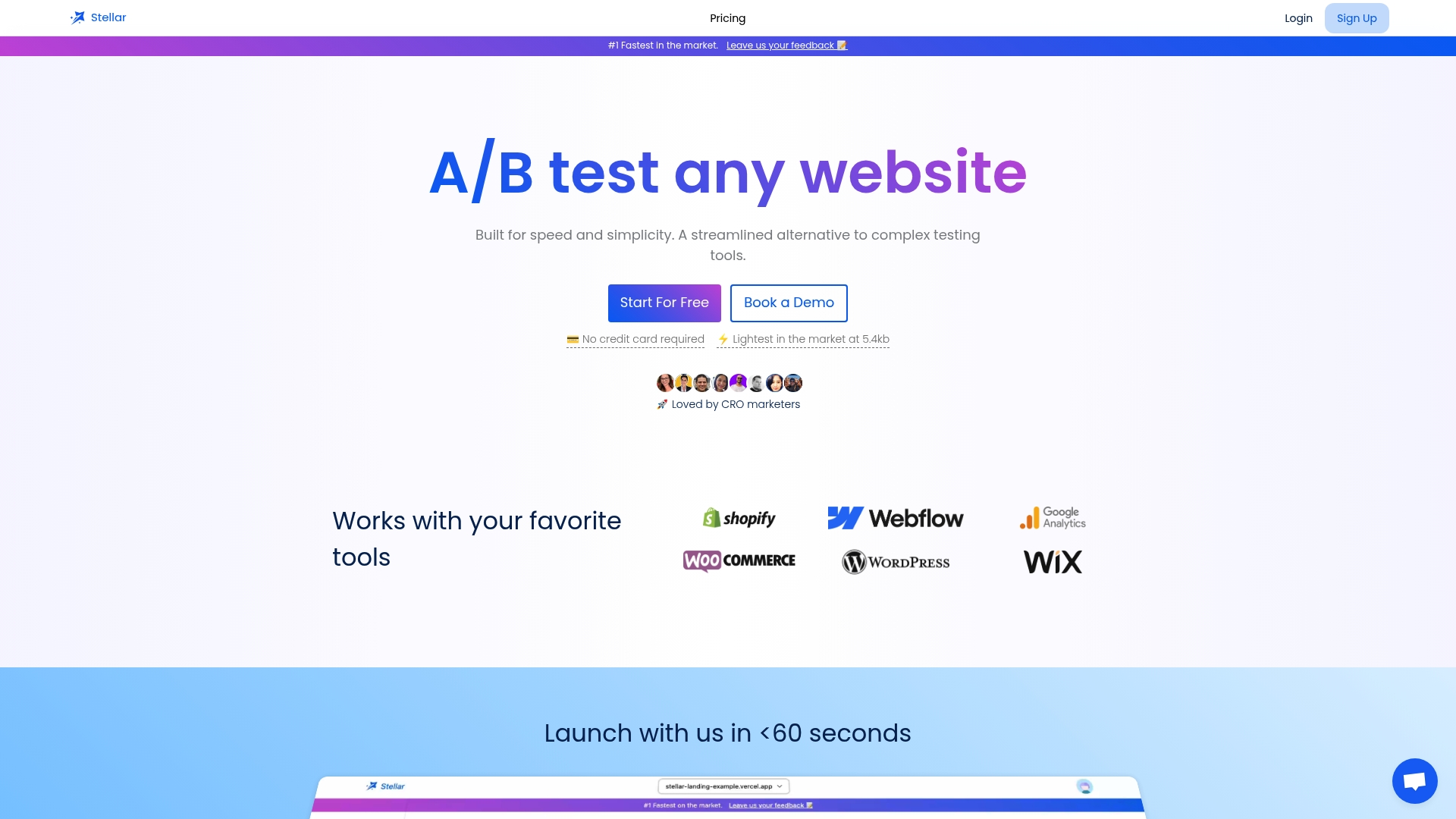
The visual editor lets you create email variants quickly through an intuitive interface that requires no coding knowledge. Set up tests in minutes rather than hours, allowing you to run more experiments and accelerate learning. Advanced goal tracking automatically monitors the metrics that matter most to your business, from opens and clicks to revenue and customer lifetime value. Real-time analytics deliver immediate insights so you can identify winners quickly and confidently.
GoStellar's platform combines powerful testing capabilities with user-friendly design specifically tailored for small to medium-sized businesses. The free plan supports up to 25,000 monthly tracked users, making sophisticated optimization accessible regardless of budget. Experience how data-driven email marketing transforms campaign performance and delivers measurable ROI improvements throughout 2026.
Frequently asked questions about email marketing A/B testing
What is the recommended sample size for reliable A/B tests?
You need at least 1,000 subscribers per variant for open rate tests and 5,000+ per variant for click-through or conversion tests to achieve statistical reliability. Smaller samples produce unstable results where random variation overwhelms true performance differences. Use sample size calculators that account for your baseline metrics, expected improvement, and desired confidence level to determine appropriate test group sizes for your specific situation.
How long should I run an email A/B test?
Most email A/B tests should run 24 to 72 hours to capture different subscriber checking patterns while maintaining consistency in external factors. Shorter durations miss evening and weekend readers, while longer tests introduce variables like changing market conditions. For B2B audiences, include at least one full business week to account for workday versus weekend behavior differences.
Can I test more than two versions at once?
Yes, multivariate testing allows you to test three or more versions simultaneously, but it requires significantly larger sample sizes to maintain statistical validity. Each additional variant splits your audience further, meaning you need proportionally more subscribers to reach reliable conclusions. Start with simple A/B tests until you've mastered the methodology, then graduate to multivariate approaches for more complex optimization.
How do I know which metric to focus on for my test?
Align your test metric with your campaign objective. Focus on open rates when testing subject lines, click-through rates when optimizing CTAs or content, and conversion rates when your goal is driving specific actions like purchases or registrations. Revenue per email provides the ultimate measure for commercial campaigns, while engagement metrics suit educational or relationship-building objectives.
Is it necessary to test every campaign or only major ones?
Prioritize testing for campaigns with large audiences, high business value, or reusable templates that will inform future sends. One-time announcements to small segments rarely justify testing investment. However, establishing a regular testing cadence for your core campaign types builds knowledge systematically and compounds improvements over time, making consistent testing more valuable than sporadic efforts on only major campaigns.
Recommended
Published: 3/13/2026