
Leveraging FOMO in Marketing: Complete Guide
More than 60 percent of shoppers admit they have made a purchase because they feared missing out. This powerful urge does not just shape personal decisions but also fuels some of the most effective marketing campaigns today. Understanding how FOMO works gives brands an edge, revealing why certain promotions trigger instant responses and how marketers use these triggers to turn interest into action.
Table of Contents
- Defining FOMO and Its Role in Marketing
- Types of FOMO Tactics Used by Marketers
- Psychological Triggers Behind FOMO Effectiveness
- Incorporating FOMO in CRO Campaigns
- Common Pitfalls and Ethical Boundaries
Key Takeaways
| Point | Details |
|---|---|
| FOMO in Marketing | FOMO leverages psychological triggers to create urgency, aligning product offerings with consumer desires for emotional engagement. |
| Effective Tactics | Tactics such as limited-time offers and exclusive access enhance urgency and social proof, compelling immediate consumer action. |
| Psychological Triggers | Key triggers include social validation, loss aversion, and competitive instinct, which marketers can ethically utilize to connect with audiences. |
| Ethical Considerations | Marketers must navigate the fine line between urgency and manipulation, ensuring transparent and responsible use of FOMO strategies. |
Defining FOMO and Its Role in Marketing
Fear of Missing Out, or FOMO, is a psychological phenomenon that has become a powerful lever in modern marketing strategies. According to Wikipedia, FOMO represents the apprehension that others might be experiencing rewarding experiences from which an individual is absent. This emotional trigger goes beyond simple curiosity—it taps into a fundamental human fear of being left behind or excluded.
In marketing, FOMO operates as a strategic psychological mechanism designed to create urgent emotional responses. As Wikipedia explains through the concept of hunger marketing, brands can artificially stimulate demand by limiting supply or creating a sense of scarcity. This approach transforms product engagement from a rational decision into an emotional imperative.
The core elements that make FOMO so effective in marketing include:
- Exclusivity: Creating a perception that an opportunity is limited
- Social Proof: Demonstrating that others are already participating
- Time Sensitivity: Establishing clear, short windows for action
- Psychological Urgency: Triggering the fear of potential regret
Successful FOMO marketing doesn't manipulate—it strategically aligns product offerings with genuine consumer desires, making participation feel less like a purchase and more like joining an exclusive experience. By understanding and ethically leveraging these psychological triggers, marketers can create compelling narratives that resonate deeply with their target audiences.
Types of FOMO Tactics Used by Marketers
Marketers have developed a sophisticated arsenal of FOMO tactics designed to trigger immediate consumer action. According to ARM Worldwide, these strategies encompass limited-time offers, exclusive access, and geo-restricted launches that create a powerful sense of urgency and exclusivity.
Wikipedia describes the concept of hunger marketing, which involves creating artificial scarcity to stimulate consumer demand. This approach transforms marketing from a simple promotional strategy into a psychological engagement mechanism that compels consumers to act quickly.
Key FOMO marketing tactics include:
- Limited-Time Offers: Countdown timers and flash sales
- Exclusive Memberships: Creating tiered access levels
- Scarcity Messaging: Highlighting limited stock or availability
- Social Proof Notifications: Real-time updates about product purchases
- Geo-Restricted Launches: Region-specific product releases
The most effective FOMO tactics go beyond simple manipulation. They tap into genuine consumer desires, creating a narrative of opportunity and excitement that makes participation feel like an exclusive experience. By understanding psychological triggers, marketers can craft strategies that feel less like pressure and more like an invitation to something special.
Explore our guide on personalization strategies to learn how to ethically implement these powerful marketing techniques.
Psychological Triggers Behind FOMO Effectiveness
At its core, FOMO taps into fundamental human psychological needs for social connection and validation. According to Wikipedia, FOMO is deeply rooted in our innate desire to belong and participate in potentially rewarding experiences. This psychological mechanism drives individuals to constantly monitor social landscapes, fearing exclusion or missing out on meaningful interactions.
The digital age has amplified these psychological triggers dramatically. Wikipedia highlights how constant smartphone notifications and digital updates create an environment of perpetual anxiety, where individuals feel compelled to stay continuously connected. This state of hypervigilance transforms FOMO from a simple fear into a powerful motivational force that marketers can strategically leverage.
Key psychological triggers that make FOMO so potent include:
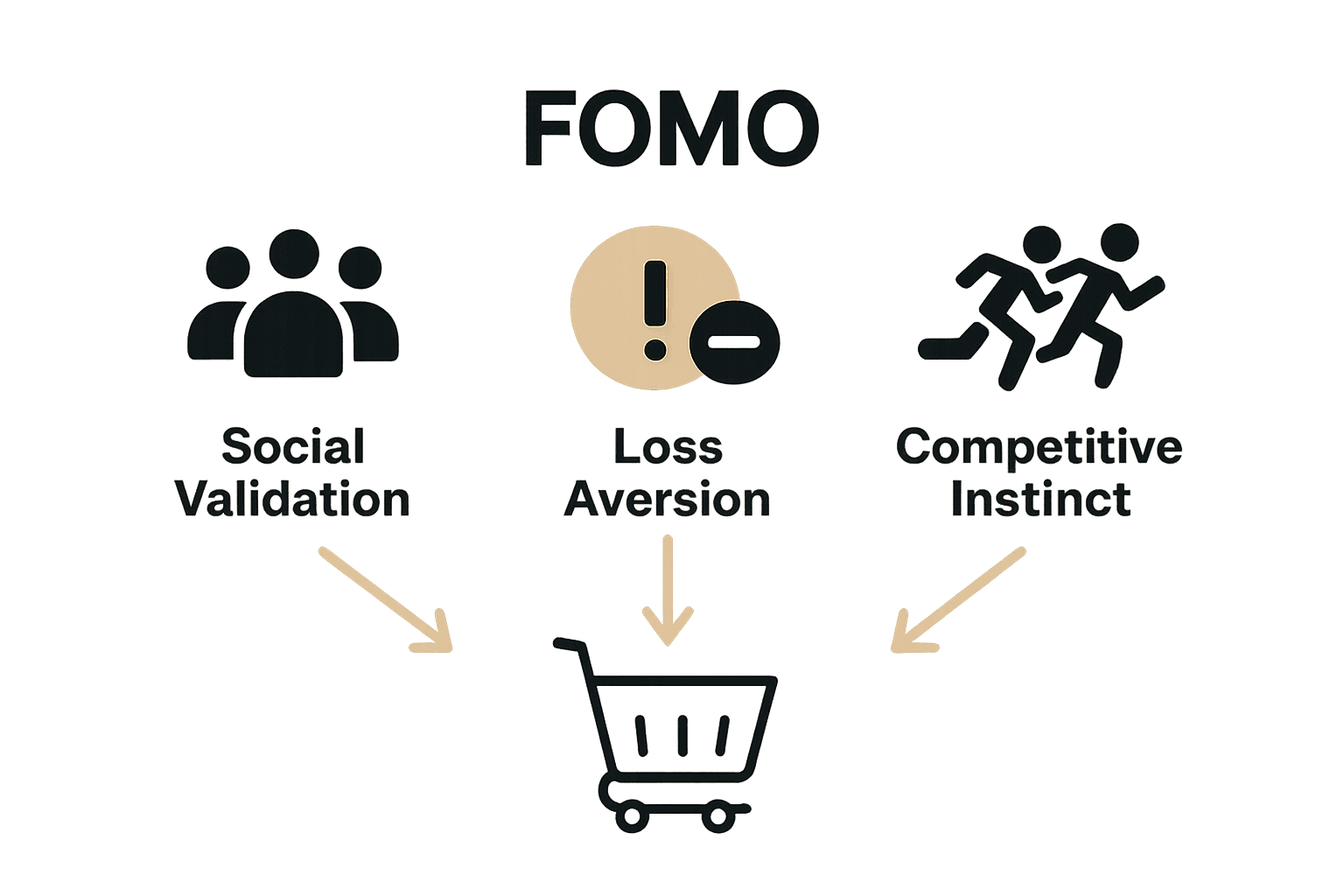
- Social Validation: The need to feel accepted and part of a group
- Loss Aversion: Fear of missing potential opportunities or experiences
- Competitive Instinct: Desire to keep pace with peers and social circles
- Uncertainty Reduction: Seeking information to minimize perceived knowledge gaps
- Emotional Investment: Creating psychological attachment to potential experiences
Understanding these triggers allows marketers to design more empathetic and engaging strategies. The most effective approaches don't manipulate but instead create genuine value and connection. By recognizing the deeper emotional needs driving FOMO, brands can transform marketing from a transactional interaction into a meaningful engagement that resonates with consumers' fundamental psychological desires. Explore our guide on personalization strategies to learn how to ethically harness these powerful psychological insights.
Incorporating FOMO in CRO Campaigns
Converting website visitors into customers requires strategic psychological triggers, and FOMO has emerged as a powerful tool in Conversion Rate Optimization (CRO). According to ARM Worldwide, CRO campaigns can leverage FOMO through tactics like limited-time offers, exclusive deals, and real-time user activity displays that create immediate urgency and social proof.
Wikipedia describes hunger marketing as a strategic approach of creating artificial scarcity, which can be powerfully integrated into CRO strategies. By making products or opportunities appear limited, marketers can compel users to take swift action, transforming hesitation into decisive conversion moments.
Effective FOMO-driven CRO techniques include:

- Countdown Timers: Highlighting time-sensitive offers
- Limited Stock Indicators: Showing real-time product availability
- Social Proof Widgets: Displaying recent purchases or interactions
- Exclusive Access Offers: Creating tiered or invitation-only experiences
- Personalized Urgency Messaging: Tailoring scarcity signals to individual user behaviors
Successful implementation requires a delicate balance between creating genuine urgency and maintaining authenticity. The most effective FOMO strategies don't manipulate but instead highlight real value and unique opportunities. Explore our guide on landing page optimization to learn how to ethically integrate these powerful conversion techniques into your marketing strategy.
Common Pitfalls and Ethical Boundaries
While FOMO marketing can be a powerful strategy, it carries significant ethical responsibilities that marketers must carefully navigate. According to Wikipedia, excessive use of FOMO tactics can lead to negative psychological effects, including increased anxiety and decreased life satisfaction among consumers. This underscores the critical need for responsible and transparent marketing approaches.
Wikipedia highlights the ethical concerns surrounding hunger marketing, particularly when tactics become manipulative or create unnecessary stress for consumers. The line between creating genuine urgency and exploiting psychological vulnerabilities is delicate and requires careful consideration.
Key ethical boundaries and potential pitfalls in FOMO marketing include:
- False Scarcity: Creating artificial limitations that don't truly exist
- Emotional Manipulation: Exploiting consumer insecurities
- Misleading Information: Presenting incomplete or deceptive offers
- Excessive Pressure: Generating undue stress or anxiety
- Privacy Violations: Misusing personal data to trigger FOMO responses
Ethical FOMO marketing demands transparency, honesty, and genuine value. Brands must prioritize consumer well-being over short-term conversions, creating strategies that inspire rather than intimidate. Explore our guide on ethical considerations in A/B testing to understand how to balance marketing effectiveness with moral responsibility.
Maximize Your FOMO Marketing Impact with Stellar's Rapid A/B Testing
The challenge of effectively leveraging FOMO in marketing lies in creating genuine urgency and personalized experiences that truly engage your audience without crossing ethical lines. This article highlights the importance of scarcity, social proof, and time-sensitive offers as key psychological triggers to convert visitors into customers quickly. If you want to test and optimize these elements flawlessly, you need a tool that empowers you to experiment fast and tailor your messages dynamically.
Take control of your FOMO-driven campaigns with Stellar's fast and lightweight A/B Testing Tool that offers a no-code Visual Editor and Dynamic Keyword Insertion for personalized landing pages. Don’t let hesitation cost you conversions—start leveraging real-time analytics to fine-tune urgency messaging and social proof tactics today. Visit Stellar now and turn FOMO into your most powerful growth engine.
Frequently Asked Questions
What is FOMO in marketing?
FOMO, or Fear of Missing Out, is a psychological phenomenon marketers leverage to create urgency and emotional responses, encouraging consumers to act quickly for fear of missing exclusive opportunities.
How do marketers create FOMO?
Marketers create FOMO through tactics like limited-time offers, exclusive memberships, social proof notifications, countdown timers, and scarcity messaging to stimulate demand and prompt immediate action from consumers.
What are the psychological triggers behind FOMO?
Key psychological triggers of FOMO include social validation, loss aversion, competitive instinct, uncertainty reduction, and emotional investment, all of which drive consumers to engage more deeply with brands and products.
What are some ethical considerations of using FOMO in marketing?
Ethical considerations include avoiding false scarcity, emotional manipulation, misleading information, excessive pressure, and ensuring privacy. Marketers should prioritize transparency and genuine value in their FOMO strategies.
Recommended
Published: 11/17/2025