
Measurement Frameworks in Marketing: Maximizing ROI
What makes one measurement framework deliver actionable results while another leaves digital marketers guessing? For professionals running A/B tests in small to medium-sized businesses, defining a strategic measurement framework is the difference between reactive tweaks and informed moves that boost user engagement. These frameworks translate fragmented data into structured insights, helping you cut through complexity and pinpoint what drives real growth. This article reveals practical guidance for building measurement systems that empower your decision-making.
Table of Contents
- Defining Measurement Frameworks In Marketing
- Types Of Marketing Measurement Frameworks
- Key Metrics And How They Work
- Real-World Applications For Smb Marketers
- Common Mistakes And How To Avoid Them
- Best Practices For Implementing Frameworks
Key Takeaways
| Point | Details |
|---|---|
| Measurement Frameworks Are Essential | They systematically evaluate and optimize marketing performance across various initiatives, turning data into actionable insights. |
| Types of Frameworks Offer Different Insights | Financial-focused, customer-centric, growth-oriented, and omnichannel frameworks help organizations align metrics with specific goals. |
| Critical Metrics for Success | Key metrics like Customer Acquisition Cost and Lifetime Value guide strategic decision-making and performance evaluation. |
| Avoid Common Mistakes | Marketers should be cautious of fragmented data, last-click attribution bias, and misaligned KPIs to improve measurement accuracy. |
Defining Measurement Frameworks in Marketing
Measurement frameworks represent strategic approaches that enable marketers to systematically evaluate and optimize marketing performance across multiple channels and initiatives. These structured methodologies transform raw data into actionable insights, allowing businesses to make informed decisions about resource allocation and campaign effectiveness.
At their core, measurement frameworks involve several critical components:
- Defining Clear Marketing Objectives: Establishing precise goals that align with broader business strategies
- Identifying Key Performance Indicators (KPIs): Selecting metrics that directly reflect marketing impact
- Data Collection Mechanisms: Creating robust systems for gathering comprehensive marketing performance data
- Analytics and Interpretation Processes: Developing methodologies to translate data into strategic recommendations
Modern measurement frameworks have evolved significantly, moving beyond simple metrics to complex performance constructs that capture nuanced marketing dynamics. This progression reflects an increasingly sophisticated understanding of how marketing contributes to overall business outcomes.

The fundamental purpose of these frameworks is transforming disparate data points into a cohesive narrative about marketing effectiveness. By establishing standardized measurement approaches, organizations can create consistent benchmarks, track performance trends, and make data-driven strategic decisions.
Pro tip: Develop a measurement framework that is flexible enough to adapt to emerging marketing technologies while remaining anchored in your core business objectives.
Types of Marketing Measurement Frameworks
Marketing measurement frameworks are diverse strategic approaches that help organizations assess performance through different analytical lenses. Marketing mix modeling approaches reveal multiple dimensions for evaluating marketing effectiveness, each targeting specific organizational goals and performance perspectives.
The primary types of marketing measurement frameworks include:
- Financial-Focused Frameworks: Prioritize direct revenue generation and return on investment metrics
- Customer-Centric Frameworks: Emphasize engagement, satisfaction, and long-term customer value
- Growth-Oriented Frameworks: Concentrate on scalability and potential future market opportunities
- Omnichannel Performance Frameworks: Analyze performance across multiple marketing channels simultaneously
Each framework offers unique insights by balancing tactical and strategic key performance indicators. Organizations typically select frameworks based on their specific business objectives, market positioning, and strategic priorities.
Here's a comparison of the main types of marketing measurement frameworks and their strategic value:
| Framework Type | Main Focus | Typical Use Case |
|---|---|---|
| Financial-Focused | Revenue and ROI | Measuring direct profit impact |
| Customer-Centric | Engagement & Lifetime Value | Tracking loyalty, repeat purchase |
| Growth-Oriented | Scalability Potential | Assessing market expansion options |
| Omnichannel Performance | Cross-Channel Synergy | Ensuring unified campaign tracking |
Modern measurement approaches integrate multiple methodological techniques, including incrementality testing, multi-touch attribution, and sophisticated data analytics. These comprehensive frameworks enable marketers to develop nuanced understanding of campaign performance beyond traditional metrics.
Pro tip: Select a measurement framework that aligns closely with your specific business goals and allows flexible adaptation as market dynamics evolve.
Key Metrics and How They Work
Marketing metrics serve as the critical navigational instruments that guide strategic decision-making and performance evaluation. Marketing metrics encompass a comprehensive range of indicators designed to measure the effectiveness and impact of marketing initiatives across various business dimensions.
The most essential marketing metrics include:
- Customer Acquisition Cost (CAC): Total expenses associated with acquiring a new customer
- Lifetime Value (LTV): Predicted total revenue generated by a customer throughout their relationship with the business
- Conversion Rates: Percentage of potential customers who complete a desired action
- Engagement Rates: Measure of audience interaction with marketing content
- Brand Equity Metrics: Quantitative assessment of brand perception and value
Each metric functions as a unique lens, providing insights into different aspects of marketing performance. Effective measurement requires understanding how these metrics interconnect and influence overall business outcomes. Modern marketing teams use sophisticated attribution modeling to trace the complex pathways between marketing activities and business results.
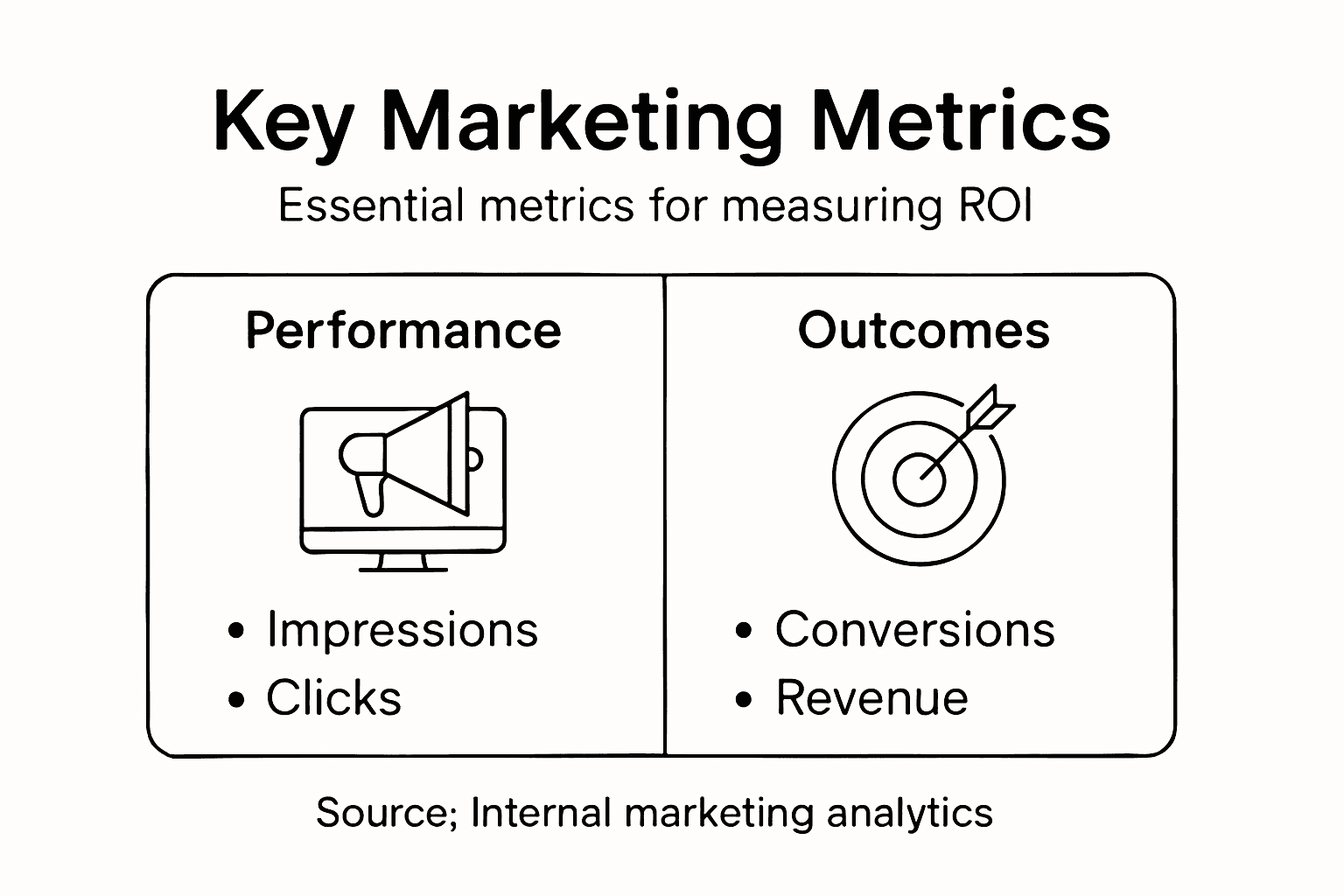
Successful metric implementation demands continuous refinement and integration with advanced analytics tools. By developing a holistic approach to measurement, organizations can transform raw data into actionable strategic intelligence that drives meaningful business growth.
Below is a summary of key marketing metrics and the insights they provide:
| Metric | What It Measures | Strategic Insight |
|---|---|---|
| Customer Acquisition Cost (CAC) | Cost to gain one customer | Efficiency of marketing spend |
| Lifetime Value (LTV) | Total customer revenue | Long-term profitability focus |
| Conversion Rate | Action completion percent | Effectiveness of campaigns |
| Engagement Rate | Audience interactions | Content impact and relevance |
| Brand Equity Metric | Brand value perceptions | Market strength and reputation |
Pro tip: Regularly calibrate your metrics to ensure they remain aligned with evolving business objectives and market dynamics.
Real-World Applications for SMB Marketers
Measurement frameworks designed for small and medium-sized businesses offer strategic approaches to maximize marketing effectiveness with limited resources. These tailored methodologies help SMB marketers navigate complex performance evaluation challenges by focusing on high-impact metrics and efficient data analysis.
Practical applications for SMB marketers include:
- Channel Performance Tracking: Identifying most effective marketing channels
- Budget Optimization: Allocating resources to highest-performing initiatives
- Conversion Rate Analysis: Understanding customer journey and touchpoint effectiveness
- Competitive Benchmarking: Comparing performance against industry standards
- Customer Acquisition Cost Management: Minimizing expenses while maximizing return
Successful implementation requires SMBs to develop agile measurement strategies that adapt quickly to changing market conditions. By integrating data from multiple sources, small businesses can create comprehensive views of their marketing performance without requiring extensive technical infrastructure.
Modern SMB marketers leverage unified measurement approaches that bridge offline and online data, enabling more nuanced insights into marketing effectiveness. This holistic approach allows businesses to make data-driven decisions that directly impact growth and profitability.
Pro tip: Start with 3-5 core metrics that directly align with your business goals and gradually expand your measurement framework as you gain more analytical sophistication.
Common Mistakes and How to Avoid Them
Marketing measurement frameworks often encounter critical systematic errors that can significantly undermine strategic decision-making. Recognizing and addressing these common pitfalls is essential for maintaining accurate performance evaluation and driving meaningful business insights.
Key mistakes marketers consistently make include:
- Fragmented Data Approach: Relying on disconnected metrics from multiple platforms
- Last-Click Attribution Bias: Overemphasizing final touchpoint in customer conversion
- Misaligned KPI Selection: Choosing metrics that don't reflect genuine business objectives
- Neglecting Cross-Channel Integration: Failing to understand holistic customer journey
- Insufficient Data Validation: Not establishing robust verification mechanisms
Successful marketers develop comprehensive strategies that transcend traditional measurement limitations. By creating unified measurement frameworks, businesses can transform disparate data points into coherent, actionable intelligence that drives strategic growth.
Effective mistake prevention requires continuous learning, technological adaptation, and a commitment to data integrity. Organizations must invest in sophisticated analytics tools, cross-functional collaboration, and a culture of analytical rigor to maintain measurement accuracy and relevance.
Pro tip: Conduct quarterly measurement framework audits to identify and eliminate potential data inconsistencies and attribution blind spots.
Best Practices for Implementing Frameworks
Effective measurement framework implementation requires strategic planning and a systematic approach to transforming data into actionable business insights. Organizations must develop robust strategies that align measurement techniques with overarching business objectives and create flexible, adaptive systems.
Key best practices for successful implementation include:
- Clear Objective Definition: Establish precise, measurable marketing goals
- Cross-Functional Collaboration: Engage marketing, analytics, and leadership teams
- Data Integration: Combine multiple data sources for comprehensive insights
- Continuous Learning: Regularly update measurement approaches
- Technology Investment: Utilize advanced analytics and AI-powered tools
Successful implementation demands more than technical infrastructure. It requires creating a culture of data-driven decision-making that empowers teams to interpret complex metrics and translate them into strategic actions.
Modern measurement frameworks must balance short-term tactical metrics with long-term strategic objectives. This holistic approach enables businesses to maintain agility while pursuing sustainable growth, ensuring that marketing efforts consistently drive meaningful business outcomes.
Pro tip: Develop a measurement framework roadmap that includes quarterly review and refinement processes to stay adaptive and relevant.
Unlock Precise Marketing Measurement with Stellar’s A/B Testing Solutions
The article highlights common challenges marketing teams face with fragmented data and misaligned KPIs when building measurement frameworks. If you are striving to maximize ROI through clear, actionable insights and want to avoid pitfalls like last-click attribution bias or neglected cross-channel integration you need tools designed to simplify and accelerate measurement effectiveness. Stellar’s fast and lightweight platform offers a no-code visual editor and advanced goal tracking that empower marketers and growth hackers to swiftly test hypotheses and measure real-time impact across campaigns.
Experience key benefits such as:
- Easy setup to align your tests with specific marketing objectives
- Dynamic keyword insertion for personalized landing pages that boost engagement
- Comprehensive analytics for reliable decision-making without technical hurdles
Ready to transform your marketing measurement framework and start making data-driven decisions fast Visit Stellar’s platform to explore how our A/B Testing Tool and real-time analytics can elevate your campaigns now. Don’t let complex data slow your growth Take control today on https://gostellar.app.
Frequently Asked Questions
What are measurement frameworks in marketing?
Measurement frameworks in marketing are strategic approaches that enable organizations to systematically evaluate and optimize marketing performance. They involve defining marketing objectives, identifying KPIs, establishing data collection mechanisms, and interpreting analytics to transform data into actionable insights.
How do I choose the right measurement framework for my business?
When choosing a measurement framework, consider your specific business objectives, market positioning, and strategic priorities. Evaluate which framework will provide the most relevant insights for your operations, whether it’s focused on financial performance, customer engagement, growth opportunities, or cross-channel effectiveness.
What are some common mistakes in implementing marketing measurement frameworks?
Common mistakes include using fragmented data from multiple platforms, overemphasizing last-click attribution, misaligning KPIs with business objectives, neglecting cross-channel insights, and failing to validate data integrity. Addressing these issues is essential for effective measurement and decision-making.
How can small and medium-sized businesses (SMBs) utilize measurement frameworks effectively?
SMBs can effectively utilize measurement frameworks by focusing on high-impact metrics like channel performance and customer acquisition costs, while leveraging efficient data analysis that integrates online and offline insights. Starting with a few core metrics and adapting strategies as they grow is crucial for maintaining marketing effectiveness.
Recommended
Published: 2/14/2026