
Optimizing for Higher ROI: SaaS A/B Testing Impact
Many SaaS marketers grapple with making their campaigns measurably profitable while keeping user engagement high. As competition intensifies, tracking and improving your marketing investment returns becomes vital for driving sustainable growth. This guide distills proven methods for optimizing A/B testing, highlighting which metrics matter most and how strategic experimentation leads to smarter decisions and lasting user satisfaction.
Table of Contents
- Defining ROI Optimization for SaaS Marketers
- Types of A/B Tests and Their Applications
- Key Metrics and Goal Tracking Techniques
- Actionable Analytics for Better Decision-Making
- Avoiding Common Testing Mistakes and Pitfalls
- Strategic Experimentation to Maximize User Engagement
Key Takeaways
| Point | Details |
|---|---|
| ROI Optimization is Essential for SaaS | Tracking Customer Acquisition Cost (CAC), Customer Lifetime Value (CLV), and Return on Advertising Spend (ROAS) is crucial for measuring marketing effectiveness and profitability. |
| A/B Testing Enhances Marketing Strategies | Implementing various A/B testing types allows marketers to incrementally improve user experiences and enhance conversion rates. |
| Comprehensive Goal Tracking is Necessary | Utilizing diverse metrics such as Revenue per Visitor and Bounce Rate is key for deriving actionable insights from A/B testing results. |
| Data-Driven Decision-Making is Critical | Leveraging advanced analytics and a culture of experimentation empowers SaaS companies to understand user behavior and optimize marketing efforts continuously. |
Defining ROI Optimization for SaaS Marketers
Return on Investment (ROI) represents the critical financial metric that determines the effectiveness and profitability of marketing efforts in the SaaS landscape. Unlike traditional business models, SaaS companies must precisely track their marketing investment returns to sustain growth and competitive positioning.
ROI optimization involves strategically measuring and improving the financial outcomes of marketing activities. Comprehensive digital marketing research highlights several key metrics SaaS marketers must track:
- Customer Acquisition Cost (CAC): Total expenses required to acquire a new customer
- Customer Lifetime Value (CLV): Projected total revenue from a customer during their relationship
- Return on Advertising Spend (ROAS): Direct revenue generated per marketing dollar spent
- Conversion Rate: Percentage of prospects becoming paying customers
Successful ROI optimization requires a data-driven approach that goes beyond surface-level metrics. SaaS marketers must integrate advanced analytics, continuously experiment with marketing strategies, and develop a nuanced understanding of their specific customer acquisition dynamics.
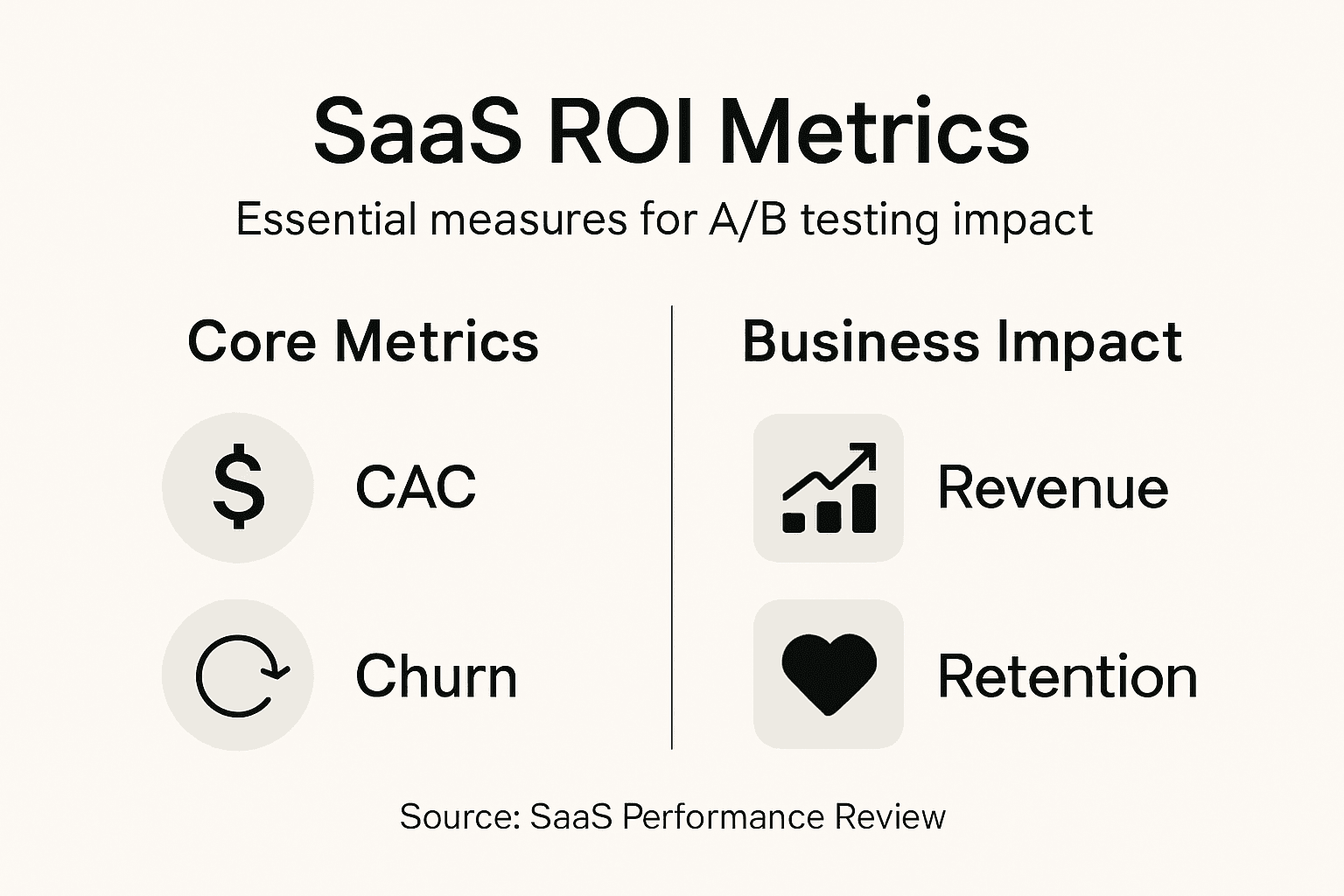
Here's a quick reference comparing key SaaS ROI metrics and their business impacts:
| Metric | What It Measures | Business Impact |
|---|---|---|
| CAC | Cost to acquire a customer | Informs marketing budget decisions |
| CLV | Revenue per customer lifetime | Guides customer retention strategy |
| ROAS | Revenue per ad dollar spent | Optimizes ad campaign effectiveness |
| Conversion Rate | Leads turning into paying users | Reveals funnel performance and quality |
By systematically analyzing these metrics, SaaS companies can make informed decisions about resource allocation, campaign optimization, and long-term growth strategies. The goal isn't just measuring performance, but creating a responsive, intelligent marketing ecosystem that consistently improves financial outcomes.
Pro tip: Implement a quarterly ROI review process that deeply analyzes your marketing metrics, comparing performance across different channels and campaigns to identify the most cost-effective strategies.
Types of A/B Tests and Their Applications
A/B testing represents a powerful methodology for SaaS marketers to systematically validate and improve their digital strategies. Comprehensive testing frameworks reveal multiple strategic approaches to experimentation that can dramatically enhance marketing performance.
The primary types of A/B tests in the SaaS ecosystem include:
- Classic A/B Testing: Comparing two direct variants of a single element (headline, button color, call-to-action)
- Split URL Testing: Evaluating entirely different webpage designs by routing traffic to alternate URLs
- Multivariate Testing: Simultaneously testing multiple variable combinations to understand complex interactions
- Multi-Page Testing: Analyzing user experiences across sequential website or onboarding pages
- Funnel Testing: Examining conversion rates and user behavior through different stages of the customer journey
Each testing methodology offers unique insights into user behavior and marketing effectiveness. Classic A/B tests work best for incremental improvements, while multivariate tests provide deeper understanding of complex design interactions. Split URL testing becomes particularly powerful when exploring radical design transformations that require comprehensive user experience redesigns.
For clarity, compare the main A/B testing methodologies and their best use cases:
| Test Type | Primary Purpose | Best Use Case |
|---|---|---|
| Classic A/B | Test single change | Improve single page element |
| Split URL | Compare full page layouts | Redesign entire webpage |
| Multivariate | Analyze multiple elements | Assess complex variable interactions |
| Multi-Page | Test through a process | Optimize step-by-step flow |
Successful SaaS marketers approach A/B testing as a continuous optimization process. By systematically experimenting with different elements, companies can incrementally improve conversion rates, reduce customer acquisition costs, and create more compelling user experiences that directly impact bottom-line performance.
Pro tip: Develop a structured A/B testing calendar that prioritizes experiments based on potential impact, allocating specific resources and timelines for each strategic test.
Key Metrics and Goal Tracking Techniques
Effective A/B testing in SaaS marketing hinges on precise goal tracking techniques that transform raw data into actionable insights. Goal tracking in conversion optimization requires a strategic approach to measuring performance across multiple dimensions.
Key metrics for comprehensive A/B testing analysis include:
- Conversion Rate: Percentage of users completing a desired action
- Statistical Significance: Confidence level of test results
- Revenue per Visitor: Direct financial impact of test variations
- Bounce Rate: Percentage of users leaving without interaction
- Average Session Duration: User engagement measurement
- Cost per Acquisition: Financial efficiency of marketing efforts
Successful goal tracking demands a holistic view of user interactions. Marketers must look beyond surface-level metrics and understand the complex interplay between different performance indicators. This means connecting quantitative data with qualitative insights, tracking not just what users do, but why they take specific actions.

Advanced SaaS teams implement multi-layered tracking strategies that segment data across user personas, traffic sources, and behavioral patterns. By creating granular tracking frameworks, companies can uncover nuanced insights that drive meaningful product and marketing improvements.
Pro tip: Implement a comprehensive tracking dashboard that aggregates metrics from multiple sources, allowing real-time visualization of A/B test performance and immediate strategic adjustments.
Actionable Analytics for Better Decision-Making
Transforming raw data into strategic insights requires more than just collecting numbers. Real-time analytics in marketing empowers SaaS companies to make intelligent, data-driven decisions that directly impact business performance.
Key components of actionable analytics include:
- Data Contextualization: Understanding the story behind the metrics
- Predictive Modeling: Forecasting potential outcomes based on current trends
- Segmentation Analysis: Breaking down performance across different user groups
- Comparative Benchmarking: Measuring performance against industry standards
- Behavioral Pattern Recognition: Identifying underlying user motivation and interaction trends
- Anomaly Detection: Quickly spotting unusual performance variations
Successful decision-making leverages advanced analytics that go beyond surface-level interpretations. Smart SaaS marketers develop sophisticated analytical frameworks that translate complex data into clear, actionable strategies. This approach requires a combination of technical expertise, strategic thinking, and a deep understanding of user behavior.
The most effective analytics strategies create a continuous feedback loop, where insights from one analysis inform the next round of testing and optimization. By treating analytics as a dynamic, iterative process, companies can continuously refine their understanding of user needs and market dynamics.
Pro tip: Implement a cross-functional analytics review process that brings together marketing, product, and data teams to ensure comprehensive interpretation of test results and strategic alignment.
Avoiding Common Testing Mistakes and Pitfalls
A/B testing success hinges on recognizing and mitigating potential errors that can undermine data integrity and marketing effectiveness. Comprehensive testing research reveals several critical pitfalls SaaS marketers must carefully navigate.
Common A/B testing mistakes include:
- Insufficient Sample Size: Drawing conclusions from statistically insignificant data
- Premature Test Termination: Stopping tests before reaching meaningful results
- Ignoring External Factors: Failing to account for seasonal variations or market shifts
- Confirmation Bias: Interpreting data to support preconceived hypotheses
- Overlooking Statistical Significance: Misinterpreting marginal performance differences
- Testing Multiple Variables Simultaneously: Complicating result interpretation
Successful A/B testing requires a disciplined, methodical approach that prioritizes statistical rigor and objective analysis. Marketers must develop a systematic framework that minimizes cognitive biases and ensures robust, actionable insights. This means establishing clear hypotheses, defining precise success metrics, and maintaining strict experimental controls throughout the testing process.
Technically sophisticated SaaS teams recognize that A/B testing is both an art and a science. They create comprehensive testing protocols that account for nuanced variables, leverage advanced statistical techniques, and continuously refine their experimental methodologies to extract maximum strategic value.
Pro tip: Develop a standardized A/B testing checklist that mandates minimum sample sizes, predefined success criteria, and mandatory statistical significance thresholds before drawing any conclusions.
Strategic Experimentation to Maximize User Engagement
Strategic experimentation transforms user interactions from static experiences into dynamic, continuously improving journeys. Customer experience research reveals that systematic testing can dramatically enhance user satisfaction and lifetime value.
Key elements of strategic user engagement experimentation include:
- Hypothesis-Driven Testing: Developing clear, measurable hypotheses before each experiment
- Granular Segmentation: Creating targeted experiments for specific user personas
- Incremental Innovation: Making small, calculated improvements over radical changes
- Cross-Functional Collaboration: Integrating insights from product, marketing, and design teams
- Continuous Learning: Treating each experiment as an opportunity to understand user behavior
- Adaptive Iteration: Quickly incorporating learnings into subsequent experiments
Successful SaaS companies approach user engagement as a complex, multidimensional challenge. They move beyond simplistic conversion metrics to understand deeper behavioral patterns, motivational triggers, and contextual nuances that drive meaningful user interactions.
The most advanced organizations create a culture of experimentation that views user engagement as an ongoing dialogue. By systematically testing, learning, and adapting, they transform traditional linear user experiences into dynamic, personalized journeys that continuously evolve with user needs.
Pro tip: Create a centralized experimentation repository that documents hypotheses, results, and key learnings, enabling your team to build institutional knowledge and prevent redundant testing.
Unlock Higher SaaS Marketing ROI with Smarter A/B Testing
Optimizing A/B testing to boost ROI is a challenge many SaaS marketers face. The article highlights critical pain points such as measuring key metrics like Customer Acquisition Cost and Conversion Rate, avoiding common testing pitfalls, and turning raw data into actionable insights. If you want to escape premature test conclusions or confusing multivariate setups, leveraging tools that simplify experimentation while delivering advanced goal tracking and real-time analytics can transform your marketing outcomes.
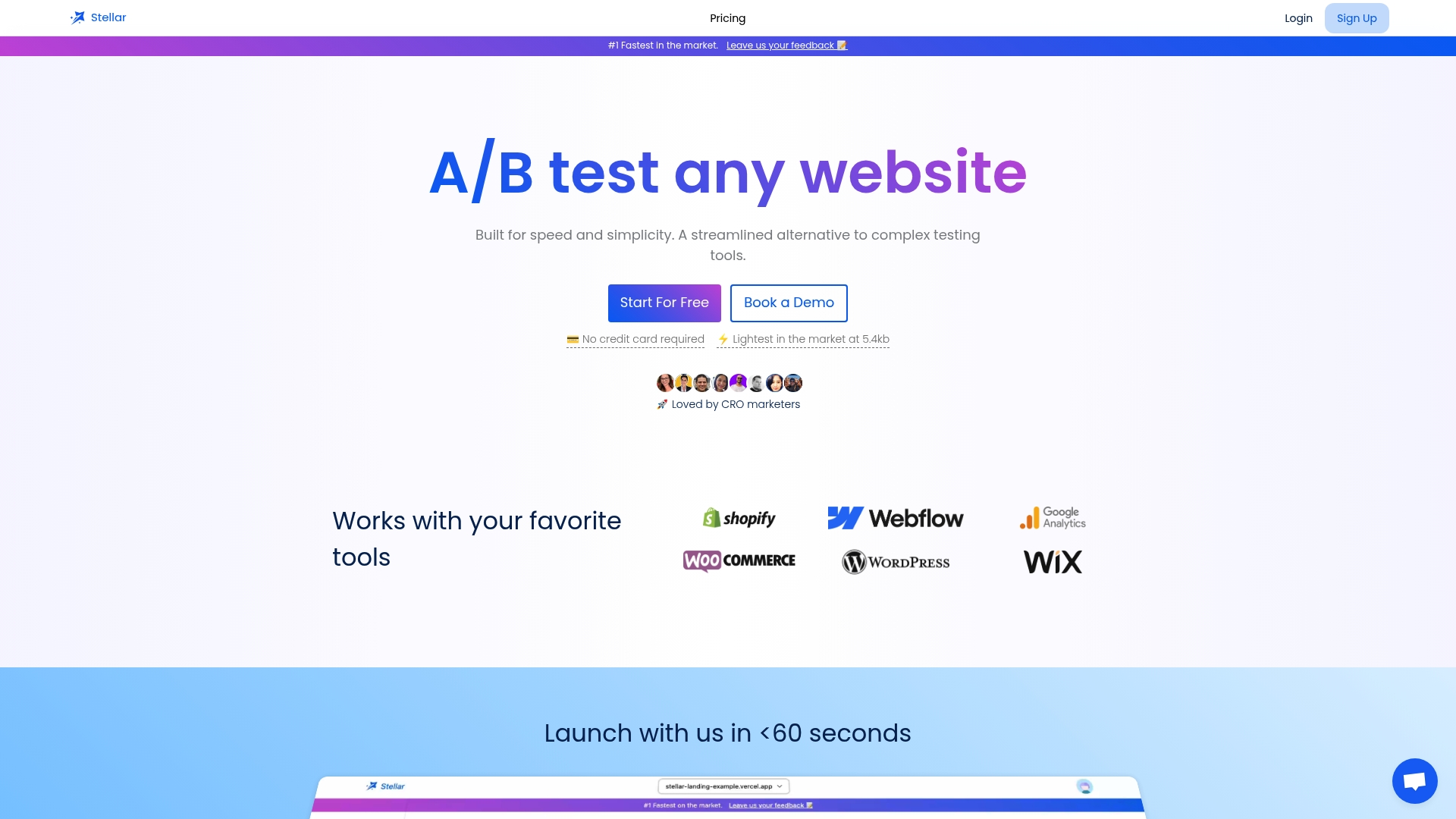
Stellar is designed precisely to solve these challenges. With a lightweight 5.4KB script and a no-code visual editor, it lets you run fast, impactful A/B tests without technical headaches. You can track conversions dynamically, optimize campaigns across user segments, and get immediate feedback with real-time analytics — all tailored for small to medium-sized SaaS businesses ready to win with data-driven marketing.
Are you ready to elevate your A/B testing strategy to maximize ROI? Discover how Stellar's A/B Testing Tool and Advanced Goal Tracking empower you to test smarter, learn faster, and decide confidently. Take control today with Stellar and start crafting experiments that truly move the needle.
Frequently Asked Questions
What is ROI optimization in the context of SaaS marketing?
ROI optimization in SaaS marketing involves systematically measuring and improving the financial outcomes of marketing efforts, focusing on metrics such as Customer Acquisition Cost (CAC), Customer Lifetime Value (CLV), and Return on Advertising Spend (ROAS).
How does A/B testing contribute to higher ROI for SaaS companies?
A/B testing allows SaaS companies to experiment with different marketing strategies and elements, such as webpage designs or call-to-action buttons, which can lead to incremental improvements in conversion rates and reduced customer acquisition costs, ultimately enhancing ROI.
What are the key metrics to track during A/B testing?
Key metrics to track during A/B testing include conversion rate, statistical significance, revenue per visitor, bounce rate, average session duration, and cost per acquisition, all of which inform the effectiveness of different strategies.
What common mistakes should be avoided in A/B testing?
Common mistakes in A/B testing include using insufficient sample sizes, stopping tests too early, ignoring external factors, and testing multiple variables simultaneously, all of which can lead to inaccurate conclusions and ineffective optimization strategies.
Recommended
Published: 2/8/2026