
Personalizing for Higher Conversions: Step-by-Step Success
Most American businesses miss out on significant growth by using generic messaging for vastly different audiences. Getting personal with your approach leads to higher trust and better results. Research shows that personalized experiences can increase conversion rates by up to 20 percent and make your brand stand out in a crowded market. If you want to reach more of your target customers and see real impact, learning how to personalize each step will set you apart.
Table of Contents
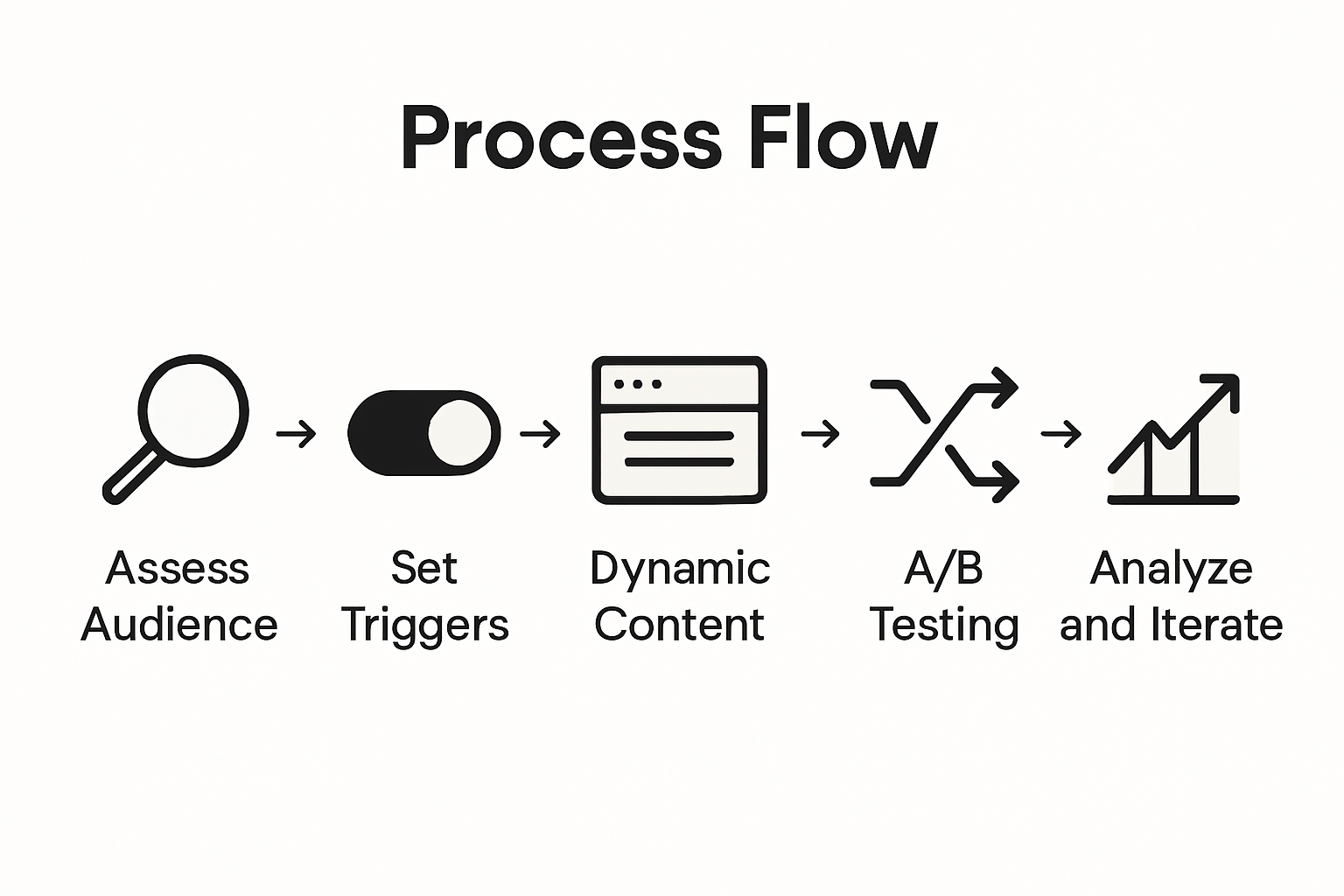
- Step 1: Assess Your Audience And Market Segments
- Step 2: Set Up Personalization Triggers And Rules
- Step 3: Customize Content With Dynamic Insertion
- Step 4: Optimize Variations Using A/B Testing Tools
- Step 5: Analyze Results And Iterate For Ongoing Improvement
Quick Summary
| Main Takeaway | Explanation |
|---|---|
| 1. Understand Your Audience Segments | Gather detailed data to create 3-5 distinct market segments for effective targeting and personalized experiences. |
| 2. Implement Personalization Triggers | Establish key conditions that will personalize web experiences based on visitor characteristics like location and behavior. |
| 3. Use Dynamic Content Insertion | Map user attributes to dynamically adjust website content, ensuring the variations feel natural and relevant without being intrusive. |
| 4. Optimize with A/B Testing | Conduct tests on different content variations and analyze the results to determine which strategies enhance user engagement and conversion. |
| 5. Continuously Analyze and Improve | Regularly review performance metrics and user feedback to refine your personalization strategies and adapt to evolving audience needs. |
Step 1: Assess Your Audience and Market Segments
Successfully personalizing your conversion strategy starts with a deep understanding of who your audience truly is. Market segmentation transforms generic marketing approaches into precision targeted experiences that resonate directly with specific customer groups.
Begin by gathering comprehensive data about your potential customers through multiple channels. User segmentation techniques reveal critical insights into demographic characteristics, behavioral patterns, and potential needs. This process involves analyzing existing customer data including age, location, purchasing history, website interactions, and engagement metrics. Look for common themes and patterns that help you distinguish different customer groups with unique preferences and motivations.
Pro tip: Avoid creating too many segments that dilute your focus. Aim for 3-5 well defined market segments that represent your most promising customer groups. Each segment should be distinct enough to warrant a customized approach but not so narrow that it becomes impractical to target. As you develop these segments, continuously validate your assumptions through ongoing testing and refinement.
The next step will involve developing targeted messaging and experiences specifically crafted for each identified market segment.
Step 2: Set Up Personalization Triggers and Rules
Personalization triggers transform static web experiences into dynamic interactions that adapt in real time to individual user characteristics. By strategically configuring personalization rules, you can create targeted experiences that speak directly to each visitor's unique context and needs.
The process begins with identifying key trigger conditions that matter most to your audience. These might include geographic location, device type, browsing behavior, time of day, or previous interaction history. For each trigger, map out specific actions your website will take. For example, a visitor from a specific region might see localized content, while a mobile user could receive a streamlined version of your landing page. Pay close attention to the granularity of your rules ensure they provide meaningful customization without creating overly complex user experiences.
Pro tip: Start simple and iterate. Begin with 2-3 core personalization rules that address your most significant audience variations. Monitor performance metrics closely and gradually expand your personalization strategy as you gain insights. Not every possible variation requires a unique rule maintain a balance between customization and operational complexity.
With your triggers and rules established, you are now prepared to implement the actual personalized content variations that will enhance user engagement and conversion potential.
Step 3: Customize Content with Dynamic Insertion
Dynamic content insertion represents the pinnacle of personalized web experiences where your website adapts instantly to individual user characteristics. Data driven personalization strategies enable you to transform static web pages into living documents that speak directly to each visitor's unique context and needs.
To implement dynamic content effectively, start by mapping specific user attributes that will trigger content variations. This might include demographic information, browsing history, past purchase behavior, or real time interaction signals. Carefully select which content elements can be dynamically adjusted such as headlines, product recommendations, imagery, or call to action buttons. The goal is to create subtle yet meaningful variations that feel natural and helpful rather than intrusive.

Pro tip: Tread carefully with personalization intensity. Research suggests that overly specific targeting can trigger privacy concerns or feel manipulative. Aim for a balanced approach that provides genuine value without making users feel their personal data is being exploited. Start with modest personalization techniques and gradually refine your approach based on user feedback and engagement metrics.
With your dynamic content insertion strategy in place, you are now prepared to test and optimize these personalized experiences to maximize conversion potential.
Step 4: Optimize Variations Using A/B Testing Tools
A/B testing transforms guesswork into precise strategy by empirically measuring how different content variations impact user behavior. Advanced cognitive modeling approaches reveal that systematic testing can uncover nuanced insights about user preferences and decision making patterns that intuition alone cannot detect.
To effectively optimize your personalization strategy, create multiple variations of your key website elements such as headlines, imagery, call to action buttons, and page layouts. Set up your A/B testing tool to split your traffic evenly between these variations, ensuring statistically significant sample sizes. Monitor key performance indicators like conversion rates, time on page, and user engagement metrics. Pay close attention to how different user segments respond to each variation tracking not just overall performance but granular responses across specific audience groups.
Pro tip: Statistical significance is your north star in A/B testing. Wait until you have collected enough data to draw reliable conclusions typically at least 1000 unique visitors per variation and a confidence level of 95% or higher. Resist the temptation to make hasty decisions based on early or incomplete data sets. Remember that true optimization is an iterative process of continuous learning and refinement.
With your A/B testing results in hand, you are now prepared to implement the most effective personalization strategies that drive meaningful conversion improvements.
Step 5: Analyze Results and Iterate for Ongoing Improvement
Personalization is not a one time project but a continuous journey of refinement and learning. Advanced market segmentation strategies underscore the critical importance of ongoing analysis and systematic iteration to optimize user experiences and drive meaningful conversion improvements.
Start by conducting a comprehensive review of your A/B testing results. Look beyond surface level metrics and dive deep into nuanced performance indicators. Compare how different user segments responded to each variation track not just overall conversion rates but granular insights like engagement duration, interaction patterns, and micro conversions. Create detailed documentation of your findings paying special attention to unexpected outcomes or counterintuitive results that challenge your initial hypotheses.
Pro tip: Embrace a growth mindset in your optimization process. Treat each test as a learning opportunity rather than a binary success or failure scenario. Set up a regular cadence for reviewing and implementing insights quarterly or biannually depending on your traffic volume. Remember that meaningful personalization is an evolutionary process where small incremental improvements compound into significant performance gains over time.
With your analysis complete, you are now equipped to develop more sophisticated personalization strategies that adapt and evolve with your audience's changing preferences.
Boost Your Conversion Rates with Seamless Personalization Tools
The article highlights key challenges many marketers face such as segmenting audiences accurately, setting up effective personalization triggers, and optimizing content with A/B testing for continual improvement. If you want to overcome these hurdles and create truly dynamic and user-focused websites that convert better, you need a solution that simplifies every step from segmentation to testing.
Stellar offers exactly that. Its no-code visual editor allows you to build personalized experiences without technical hassle. The platform’s lightning-fast A/B testing tool, combined with dynamic keyword insertion, makes customizing content for your audience effortless. With advanced goal tracking and real-time analytics at your fingertips, you can monitor what works and continuously refine your approach just like the article recommends.
Ready to put these proven personalization strategies into action? Explore Stellar’s all-in-one platform designed for marketers and growth hackers looking to increase conversions with ease.
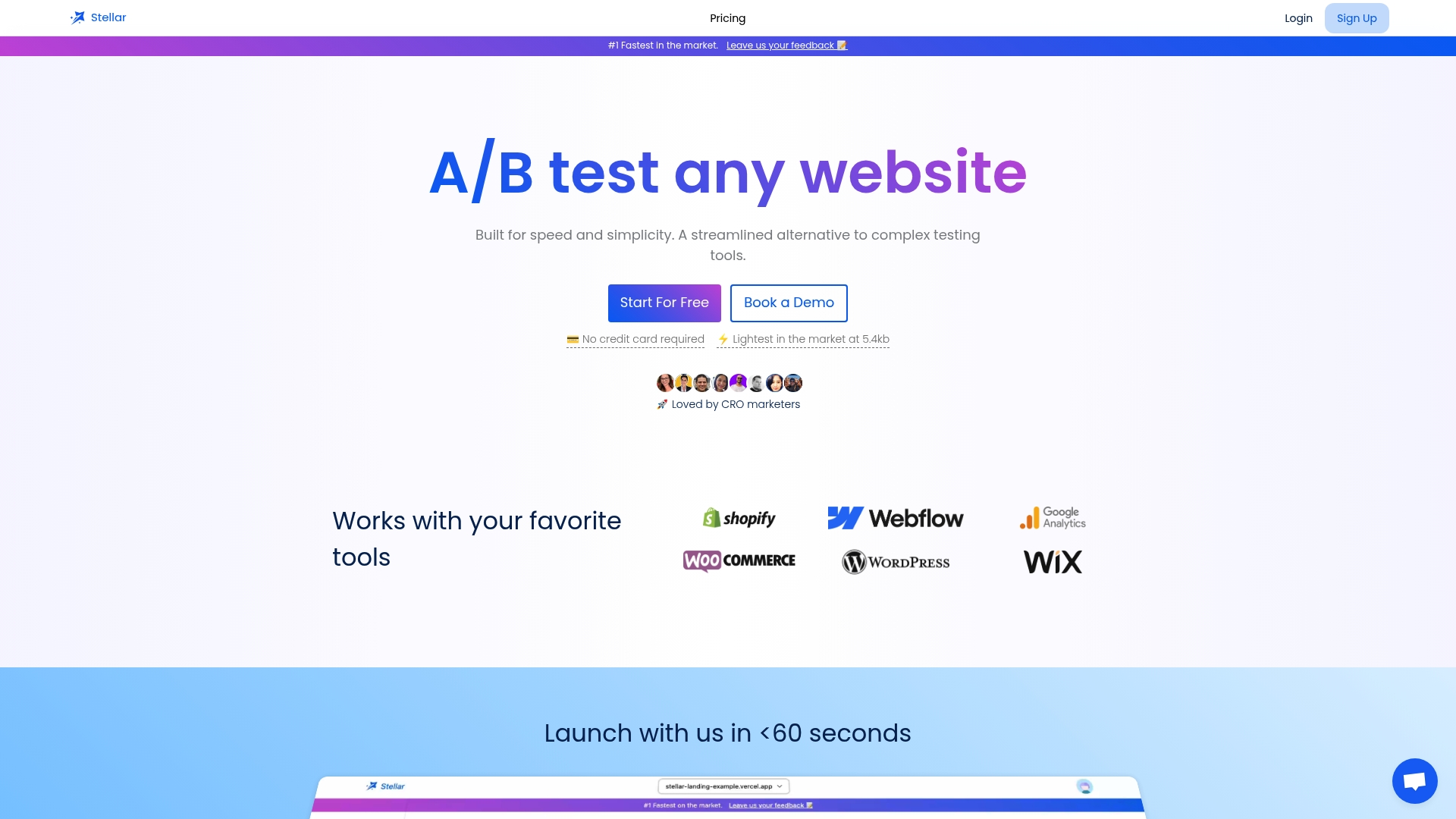
Don't wait to turn insights into revenue. Start your free plan today and experience how quick, effective experimentation can transform your marketing results at https://gostellar.app. Learn more about personalization tactics and how to make data-driven decisions by visiting Stellar's landing page now.
Frequently Asked Questions
How do I start assessing my audience for personalized marketing?
Begin by gathering data on your potential customers through various channels. Analyze demographic details and behavioral patterns to identify 3-5 distinct market segments that represent your most promising customer groups.
What are personalization triggers, and how can I set them up?
Personalization triggers are conditions that customize the user experience based on individual characteristics. Identify key triggers like browsing behavior or geographic location, and then create simple rules to personalize content accordingly.
How can I effectively implement dynamic content insertion on my website?
Dynamic content insertion customizes elements of your website in real time based on user attributes. Map specific user traits that will trigger content changes, such as past purchases or demographics, and select what elements to adjust, like headlines or product recommendations.
What steps should I take to optimize my personalization strategy through A/B testing?
Set up A/B tests by creating multiple variations of key elements on your site and measure their performance. Monitor metrics like conversion rates and user engagement to identify which variations resonate best with your audience.
How often should I analyze results from my personalization initiatives?
Regularly analyze your results, ideally every quarter or biannually, to ensure ongoing improvement. Dive deeper into performance metrics across user segments and document findings to refine your personalization approach continuously.
What mindset should I adopt for successful personalization?
Embrace a growth mindset, viewing each test as a learning opportunity rather than a definitive success or failure. Aim for incremental improvements that can compound over time; even small adjustments can lead to significant performance gains in the long run.
Recommended
Published: 12/15/2025