
Proven Steps to Improve Conversions on Your Site
Over 70 percent of marketers say A/B testing delivers better conversion rates, yet many stumble without a clear plan. With digital competition sharpening, every page visit becomes a new opportunity or a lost sale. By understanding exactly who your audience is and how to measure their actions, you can start building campaigns that turn data into growth instead of confusion.
Table of Contents
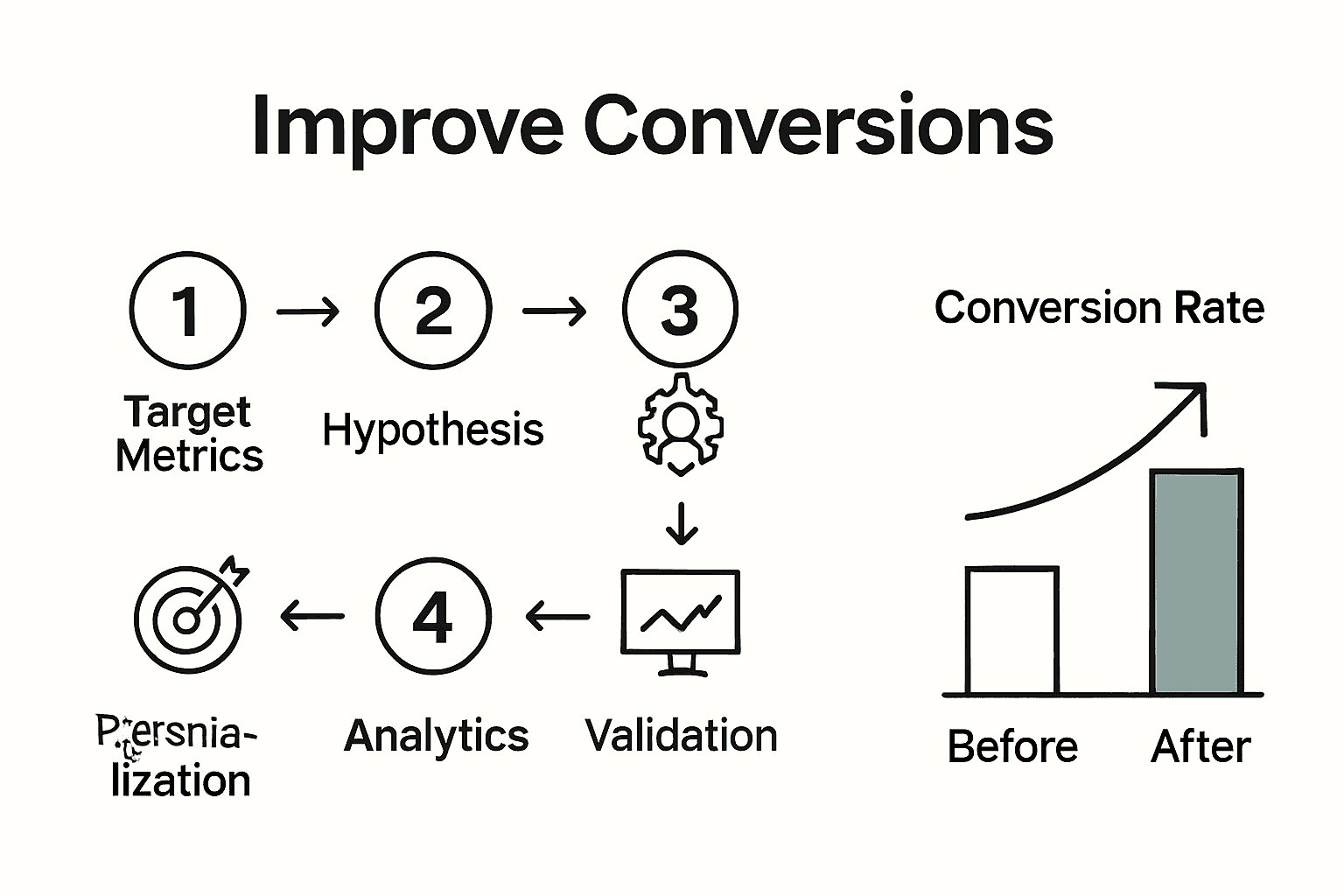
- Step 1: Define Target Metrics And Audience Segments
- Step 2: Set Up High-Impact A/B Tests With Clear Hypotheses
- Step 3: Personalize Landing Pages Using Keyword Insertion
- Step 4: Integrate Real-Time Analytics And Goal Tracking
- Step 5: Validate Results And Iterate For Continuous Improvement
Quick Summary
| Key Point | Explanation |
|---|---|
| 1. Define clear target metrics | Identify specific conversion goals such as purchases or signups to measure performance effectively. |
| 2. Formulate structured hypotheses | Develop testable hypotheses that link proposed changes to expected outcomes for tested variations. |
| 3. Personalize landing pages dynamically | Use keyword insertion to tailor content to user search intent, enhancing relevance and engagement. |
| 4. Implement real-time analytics | Set up robust tracking for immediate insights into user behavior and test performance to guide decisions. |
| 5. Validate results systematically | Analyze test outcomes for statistical significance and refine strategies based on nuanced audience insights. |
Step 1: Define target metrics and audience segments
Defining precise target metrics and audience segments forms the strategic foundation for successful conversion rate optimization. Your goal in this step is to create a laser focused understanding of who your ideal customers are and exactly what actions you want them to take.
As digitalacademy highlights, A/B testing is fundamentally about comparing different options to see which generates better conversion rates. This means you need crystal clear metrics that allow you to measure performance accurately. Start by identifying your primary conversion goals whether they are product purchases, email signups, demo requests or other key actions.
To effectively segment your audience, break down your potential customers based on several critical dimensions. Consider factors like demographic characteristics, behavioral patterns, purchasing history, engagement levels, and specific pain points. Create detailed persona profiles that represent your ideal customer segments. The more granular and specific your segmentation, the more precisely you can tailor your optimization strategies.
A critical warning comes from xerago: without a hypothesis-driven approach, your testing lacks direction and clarity. Before launching any tests, develop a clear hypothesis about what you expect to happen and why. This structured approach ensures your A/B tests provide actionable insights rather than random data points.
In the next step, you will transform these audience insights into concrete testing hypotheses that can drive meaningful conversion improvements. By defining your metrics and segments with precision, you set the stage for strategic optimization efforts.
Step 2: Set up high-impact A/B tests with clear hypotheses
Setting up impactful A/B tests requires a strategic approach that transforms your conversion optimization efforts from guesswork to precision. Your mission is to design tests that deliver meaningful insights and measurable improvements.
According to awa-digital, you must begin by articulating crystal clear goals that go beyond vague aspirations. Instead of saying 'increase conversions', define specific metrics like 'increase landing page conversion rate from 2.5% to 3.5%'. This quantifiable approach provides a concrete benchmark for success.
Craft a robust hypothesis that directly connects your proposed changes to expected outcomes. For instance, 'By adding social proof testimonials to the product page, we expect to increase conversion rates by 15%'. Each hypothesis should include three key elements: the specific change, the expected impact, and the rationale behind your prediction.
Xerago warns that without a structured hypothesis, your testing will lack direction and credibility. Ensure your hypothesis is testable, measurable, and rooted in a clear understanding of user behavior. Select one variable to test at a time to maintain clarity and isolate the impact of your changes.
As you explore potential test variations, look for A/B test hypothesis examples that can inspire your approach and provide frameworks for effective experimentation. The next step will involve implementing your carefully designed tests and preparing to analyze the results systematically.
Step 3: Personalize landing pages using keyword insertion
Personalizing landing pages through strategic keyword insertion can dramatically improve user engagement and conversion rates. Your goal is to create dynamic content that speaks directly to each visitor's specific interests and search intent.
According to toastycard, effective personalization follows a clear framework of hypothesis testing. Consider developing a hypothesis like 'If we dynamically insert user search keywords into our headline, then conversion rates will increase by 20% because the content feels more relevant and targeted'.
To implement keyword insertion effectively, start by analyzing your primary traffic sources and most common search queries. Use these insights to create flexible content templates that can dynamically swap key phrases based on the user's origin. For instance, if someone searches 'affordable marketing tools', your landing page headline could automatically adapt to read 'Best Affordable Marketing Tools for Your Business'.
When exploring landing page personalization techniques, prioritize maintaining page load speed while personalizing content. Select lightweight personalization methods that dont compromise performance.
Implement tracking parameters and UTM codes to help your system recognize and respond to different audience segments.

In the next step, you will measure the impact of these personalized experiences and iterate on your approach to continually refine your conversion strategy.
Step 4: Integrate real-time analytics and goal tracking
Integrating real-time analytics transforms your conversion optimization strategy from reactive guesswork to proactive, data-driven decision making. Your mission is to set up robust tracking that provides instant insights into user behavior and test performance.
As awa-digital recommends, begin by clearly articulating specific goals beyond vague conversion targets. Define precise metrics like 'increase checkout page conversion rate from 2.5% to 3.5%' to establish clear benchmarks for success. Configure your analytics to track these exact performance indicators in real time.
Establish comprehensive goal tracking by identifying key conversion events across your funnel. These might include page views, button clicks, form submissions, product selections, and final purchases. Implement event tracking that captures user interactions with granular detail, allowing you to understand exactly where users engage or drop off.
When exploring conversion tracking strategies, prioritize setting up custom dashboards that provide immediate visibility into your most critical metrics. Integrate multiple data sources to create a holistic view of user behavior, comparing performance across different segments and traffic sources.
The warning from xerago rings true: without structured tracking, your testing lacks direction and actionable insights. Ensure your analytics setup provides clear, immediate feedback that allows rapid iteration and optimization.
In the next step, you will learn how to interpret these analytics and translate data into meaningful improvements for your conversion strategy.
Step 5: Validate results and iterate for continuous improvement
Validating A/B test results is where data transforms into actionable insights that drive meaningful conversion improvements. Your goal is to systematically analyze test outcomes and develop a strategic approach to ongoing optimization.
According to awa-digital, success begins with quantifiable goals. Beyond surface level metrics, dig deep into statistical significance. Look for results that demonstrate a clear performance difference with a confidence level of at least 95%. Compare your baseline performance against test variations to understand precise incremental gains.
When analyzing split test results, pay close attention to segment specific performance. Different audience groups might respond uniquely to your variations. Break down results by traffic source, device type, geographic location, and user behaviors to uncover nuanced insights that generic analysis might miss.
The warning from xerago resonates strongly: without a structured approach, testing lacks credibility and direction. Develop a consistent framework for evaluating test results that includes clear success criteria, statistical validation, and a systematic process for implementing winning variations.
Remember that conversion optimization is an ongoing journey. Each test provides learning opportunities, whether the results meet your expectations or not. Continuously refine your hypotheses, challenge existing assumptions, and maintain a culture of data driven experimentation.
Unlock Higher Conversions With Precision Testing Today
Are you ready to tackle the challenges of defining clear conversion goals and crafting data-driven A/B tests that actually deliver results? This article highlights common pain points like creating measurable hypotheses, personalizing landing pages, and integrating real-time analytics to avoid guesswork. These are exactly the obstacles marketers face when trying to turn visitor traffic into meaningful actions.
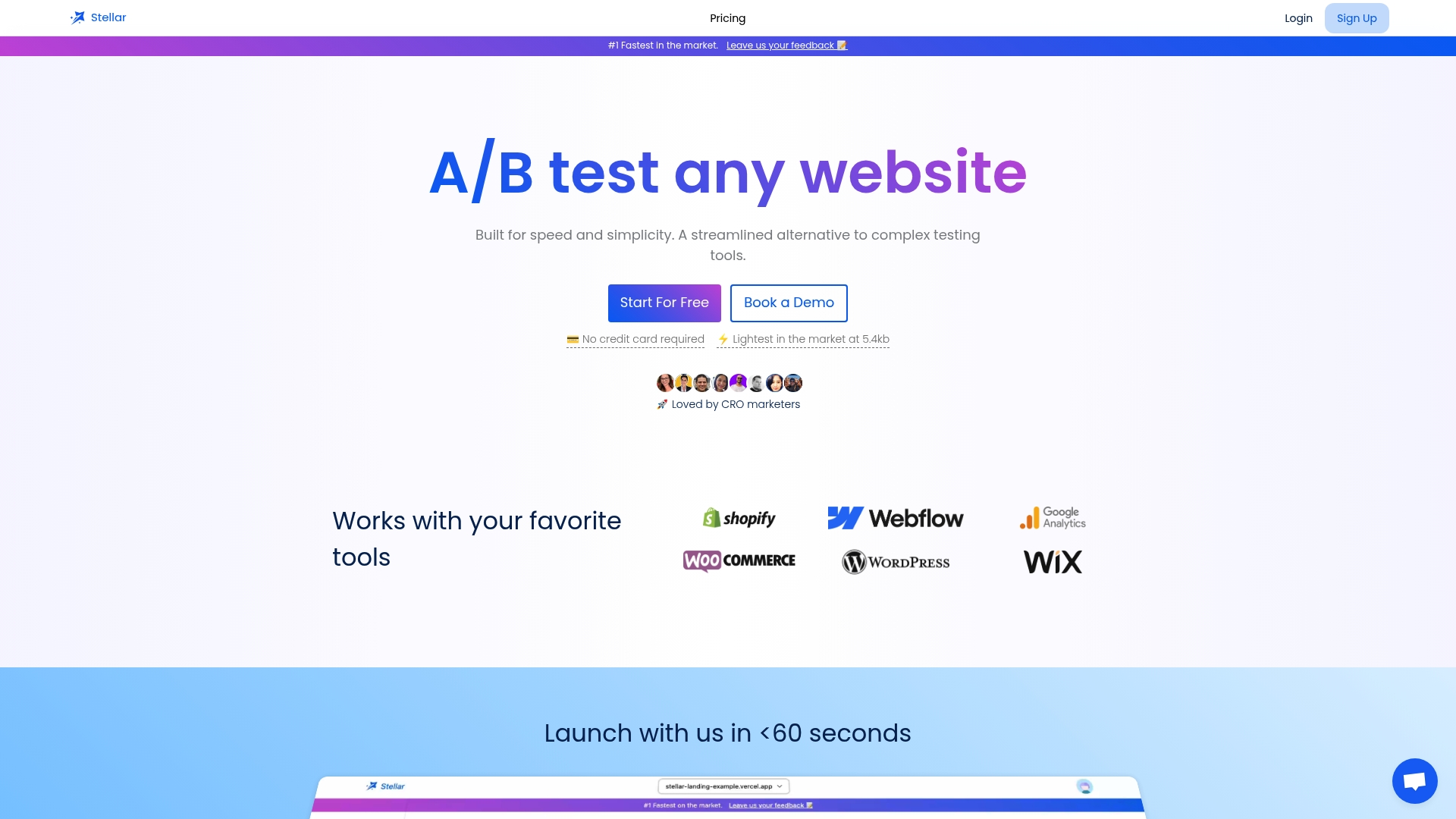
Discover how Stellar removes the complexity from A/B testing with a lightweight, no-code visual editor designed for small to medium businesses. With Stellar's dynamic keyword insertion and advanced goal tracking, you can personalize experiences and measure impact instanteously without slowing down your site. Start streamlining your testing process with real-time insights today and stop wasting time on unclear experiments. See how easy conversion rate optimization can be at Stellar's landing page.
Ready to win more customers? Visit https://gostellar.app now and start accelerating your growth with confidence.
Frequently Asked Questions
How do I define target metrics to improve conversions on my site?
To define target metrics, start by identifying your primary conversion goals, such as product purchases or email signups. Outline specific, measurable benchmarks like increasing your landing page conversion rate from 2.5% to 3.5% to provide clear objectives for your optimization efforts.
What are effective strategies for audience segmentation?
Effective audience segmentation involves breaking down your potential customers based on demographics, behavior, purchasing history, and pain points. Create detailed customer personas to tailor your optimization strategies and enhance engagement with your ideal segments.
How can I set up A/B tests with clear hypotheses?
To set up impactful A/B tests, clearly define measurable goals and develop robust hypotheses linking your proposed changes to expected outcomes. For instance, hypothesize that adding social proof testimonials may increase conversion rates by 15% and ensure each hypothesis is testable and focused on one variable at a time.
What is keyword insertion, and how can it improve my landing pages?
Keyword insertion involves dynamically placing user search terms into your landing page content, making it more relevant to visitors. For example, if a user searches for 'affordable marketing tools', personalize the headline to say 'Best Affordable Marketing Tools for Your Business' to enhance engagement and potentially boost conversion rates by around 20%.
How do I integrate real-time analytics for conversion optimization?
Integrate real-time analytics by clearly defining your goals and setting up tracking for key conversion events, like button clicks and form submissions. Create custom dashboards to monitor these metrics for immediate insights and adjust your strategy based on user behavior.
How can I validate A/B test results effectively?
To validate A/B test results effectively, analyze the data for statistical significance, ensuring a confidence level of at least 95%. Compare the performance of your test variations against your baseline to identify clear improvements, and develop a consistent framework for evaluating and implementing winning variations to enhance conversions continuously.
Recommended
- How to Increase Conversions: 7 Proven Strategies for Success
- Boost Your Ecommerce Conversion Rate: Proven Tactics for More Sales
- Website conversions : guide complet pour optimiser vos résultats
- Cómo aumentar conversiones en 2025: estrategias clave para CRO
- Converting Website Traffic: Proven Strategies for 2025
- Zo verhoog je jouw conversiepercentage - Ondernemers Plaza Online
Published: 11/2/2025