
User Experience Optimization: Complete Guide for Marketers
Over 88 percent of online users say they will not return to a site after a bad experience. User experience optimization has become a top priority for brands that want to keep visitors engaged and satisfied. By understanding what makes digital interactions smooth and enjoyable, you can improve not just conversion rates but also long-term customer loyalty. This guide explores practical strategies and proven methods that help turn every visit into a positive user journey.
Table of Contents
- Defining User Experience Optimization Essentials
- Types of UX Optimization Methods Explained
- Integrating A/B Testing Into UX Strategy
- Leveraging Real-Time Analytics For Better UX
- Avoiding Common UX Pitfalls And Mistakes
Key Takeaways
| Point | Details |
|---|---|
| User Experience Optimization | Focus on creating intuitive and responsive digital interactions that meet user needs, utilizing strategies like behavior analysis and continuous performance tracking. |
| A/B Testing Importance | Implement A/B testing to compare design variations and derive insights on user preferences, ensuring statistical significance in the results for valid conclusions. |
| Real-Time Analytics | Leverage real-time analytics to gain immediate insights into user behavior and interaction patterns, allowing for quick adjustments to enhance user experience. |
| Avoiding UX Pitfalls | Identify and address common UX mistakes such as complicated navigation and slow loading times to improve overall usability and user satisfaction. |
Defining User Experience Optimization Essentials
User experience (UX) optimization represents a strategic approach to enhancing digital interactions by systematically improving how users engage with websites, applications, and digital platforms. According to arxiv, this process involves leveraging advanced methodologies like Augmented Web Usage Mining (AWUM) to deeply understand and enrich user interaction data, ultimately creating more intuitive and responsive digital experiences.
At its core, user experience optimization focuses on creating seamless, meaningful interactions that meet user needs and expectations. Drawing insights from en.wikipedia, we understand that design serves as critical communication between digital interfaces and users. The goal is to develop intuitive pathways that guide users effortlessly through their digital journey, minimizing friction and maximizing satisfaction.
Effective UX optimization involves several key strategies:
- Comprehensive user behavior analysis
- Continuous performance tracking
- Iterative design improvements
- Data-driven decision making
- Personalization of user interactions
Marketers and product teams must approach UX optimization as an ongoing process of learning, testing, and refining. 7 Essential User Experience Best Practices for Success offers deeper insights into practical implementation techniques that can transform digital experiences from functional to exceptional.
Types of UX Optimization Methods Explained
User experience optimization encompasses several distinct methodological approaches, each targeting different aspects of digital interaction design. According to en.wikipedia, usage-centered design represents a sophisticated strategy that focuses on understanding user intentions and analyzing usage patterns through abstract use cases, enabling designers to derive more intuitive visual and interaction frameworks.
Contrasting with traditional user-centered approaches, en.wikipedia highlights use-centered design, which emphasizes specific domain skill performance and task requirements. This method shifts focus from generic user needs to the precise demands of work environments, allowing for more targeted and contextually relevant optimization strategies.
Key UX optimization methods include:
- Behavioral Analysis: Tracking and interpreting user interaction patterns
- Heuristic Evaluation: Systematically reviewing interface against established usability principles
- A/B Testing: Comparing different design variations to determine optimal user experience
- Prototype Testing: Validating design concepts through interactive user feedback
- Contextual Inquiry: Observing users in their natural environment to understand genuine interaction needs
For marketers seeking to dive deeper into practical implementation, User Experience Testing Strategies for CRO & Growth in 2025 provides comprehensive insights into advanced optimization techniques that can transform digital interactions from basic to exceptional.
Integrating A/B Testing Into UX Strategy
A/B testing represents a critical methodology for systematically improving user experience by comparing different design variations. According to arxiv, advanced techniques like Pairwise Preference Multileaving (PPM) provide sophisticated approaches for evaluating user interactions, offering scalable methods to understand and optimize digital experiences with theoretical precision.
The complexity of effective A/B testing extends beyond simple design comparisons. arxiv highlights the importance of choosing appropriate methodological frameworks, emphasizing that unbiased learning techniques are crucial for generating meaningful insights about user preferences and interaction patterns.
Key steps for integrating A/B testing into UX strategy include:
- Hypothesis Development: Clearly define measurable objectives
- Variant Creation: Design alternative interface versions
- Traffic Segmentation: Randomly distribute users across test variations
- Comprehensive Metrics Tracking: Monitor user engagement, conversion rates
- Statistical Significance Validation: Ensure results are not due to random chance
Marketers looking to master the nuanced art of A/B testing can gain deeper insights from 7 A/B Testing Best Practices Every Marketer Must Know, which offers comprehensive guidance on implementing robust testing strategies that drive meaningful user experience improvements.

Leveraging Real-Time Analytics for Better UX
Real-time analytics has emerged as a transformative approach for understanding and improving user experience with unprecedented depth and immediacy. According to arxiv, the Augmented Web Usage Mining (AWUM) methodology represents a breakthrough in analytics, processing over 1.2 million session records to provide enriched insights into user behavior and interaction patterns across digital platforms.
Beyond traditional analytics, modern approaches focus on dynamic, context-aware evaluation techniques. arxiv demonstrates how semi-automated usability evaluation frameworks can provide real-time assessments of interactive systems, enabling marketers and designers to quickly identify and address potential user experience friction points.
Key strategies for leveraging real-time analytics include:
- Continuous User Behavior Tracking: Monitor interactions in milliseconds
- Immediate Performance Diagnostics: Detect and respond to user engagement drops
- Personalization Triggers: Dynamically adjust user interfaces based on real-time data
- Predictive User Experience Modeling: Anticipate user needs before they arise
- Granular Conversion Funnel Analysis: Understand precise drop-off points
For marketers seeking to deepen their understanding of analytics implementation, How to Choose Analytics Tools: Guide for Marketers 2025 provides comprehensive guidance on selecting and integrating the most effective tools for transforming raw data into actionable user experience insights.
Avoiding Common UX Pitfalls and Mistakes
User experience design demands a nuanced approach that balances aesthetics with functional usability. According to en.wikipedia, the aesthetic-usability effect reveals that users perceive more visually appealing designs as inherently more intuitive, highlighting the critical importance of creating interfaces that are both beautiful and functionally seamless.
en.wikipedia introduces the pluralistic walkthrough methodology, a collaborative approach that brings together users, developers, and usability experts to systematically identify and address potential user experience challenges before they impact end-user interactions. This proactive strategy helps organizations catch and resolve design issues early in the development process.
Common UX pitfalls to watch for include:
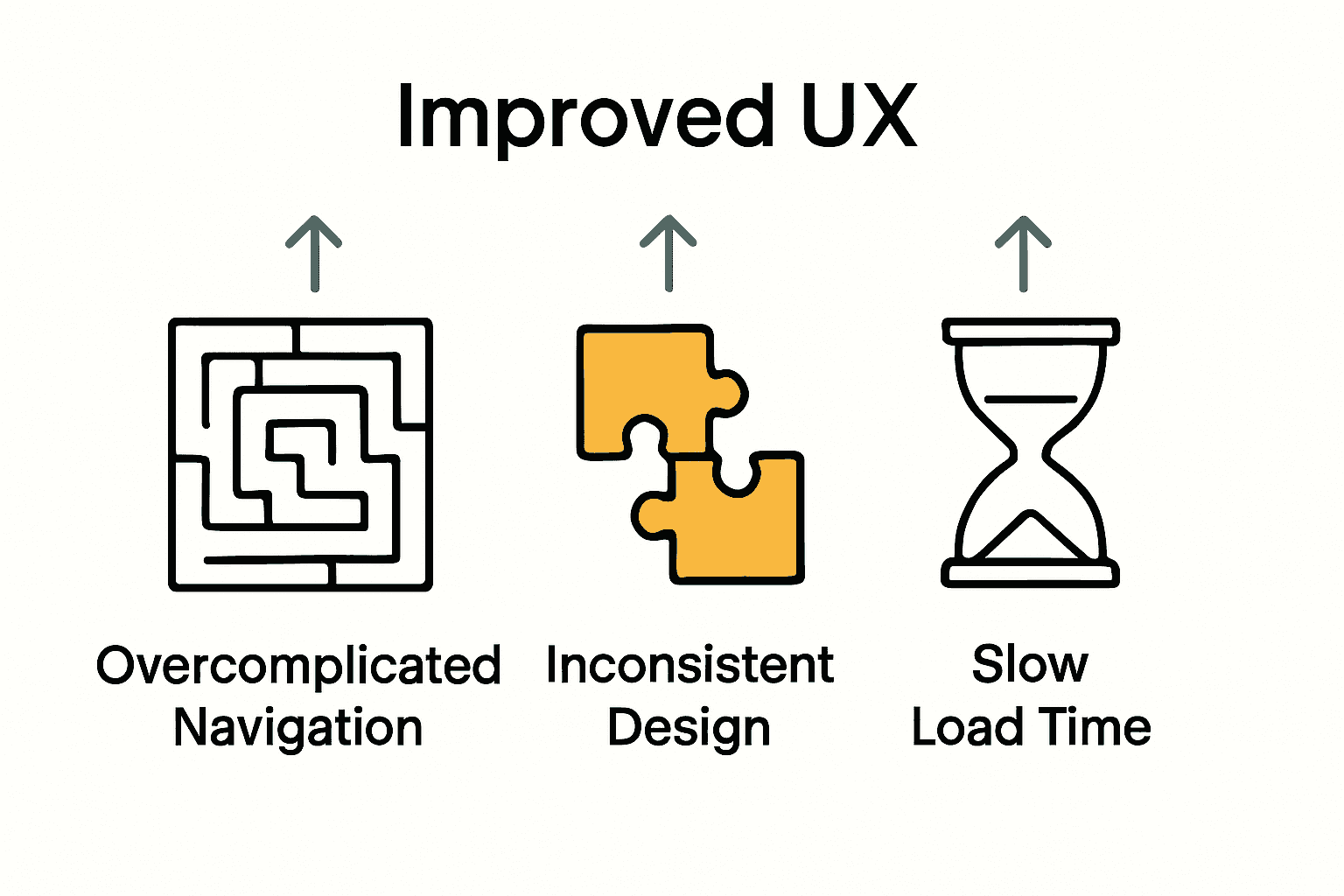
- Overcomplicated Navigation: Creating confusing menu structures
- Inconsistent Design Language: Varying interface elements across pages
- Slow Loading Times: Neglecting performance optimization
- Poor Mobile Responsiveness: Ignoring cross-device user experiences
- Lack of Clear User Feedback: Failing to communicate system status
Marketers seeking practical insights can explore 7 Common Website Usability Issues and How to Fix Them, which provides actionable strategies for transforming potential UX challenges into opportunities for enhanced user engagement.
Take Your User Experience Optimization to the Next Level with Stellar
Marketers face the ongoing challenge of turning user insights into impactful digital experiences that truly engage. This article highlights core issues like simplifying A/B testing, tracking real-time analytics, and creating personalized interactions without technical complexity. If you want to overcome common pitfalls such as slow testing processes or unclear user feedback, adopting a solution tailored for fast, efficient experimentation is key.
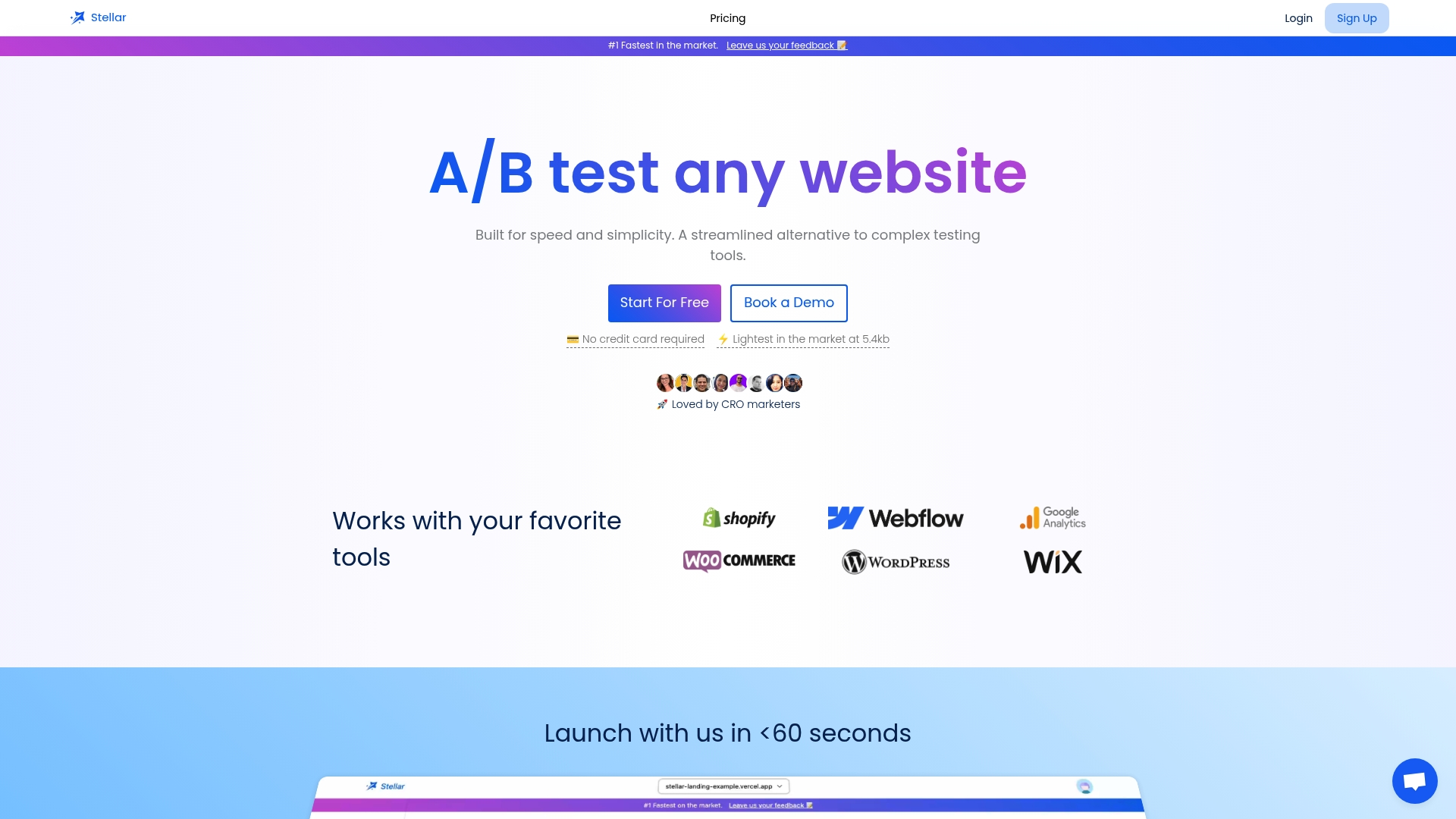
Unlock the power of Stellar, the fastest A/B testing tool designed specifically for marketers and growth hackers at small to medium-sized businesses. With a lightweight 5.4KB script and a no-code visual editor, Stellar lets you set up, launch, and analyze experiments seamlessly. Benefit from advanced goal tracking, dynamic keyword insertion for personalized experiences, and real-time analytics that take the guesswork out of optimizing your website. Start turning your data into actions now by exploring Stellar's A/B Testing Tool. Dive deeper into optimization best practices in our User Experience Testing Strategies for CRO & Growth in 2025 to see how Stellar makes continuous improvement effortless.
Take control of your user experience today with Stellar at https://gostellar.app and create seamless journeys your audience will love.
Frequently Asked Questions
What is user experience optimization?
User experience optimization is a strategic approach aimed at enhancing digital interactions by systematically improving how users engage with websites, applications, and digital platforms, focusing on creating meaningful and seamless interactions that meet user needs.
What are some key strategies for effective UX optimization?
Key strategies include comprehensive user behavior analysis, continuous performance tracking, iterative design improvements, data-driven decision making, and personalization of user interactions.
How can A/B testing be integrated into a UX strategy?
A/B testing can be integrated by developing clear hypotheses, creating design variants, segmenting traffic randomly, tracking comprehensive metrics, and validating statistical significance to ensure meaningful insights into user preferences.
What are common pitfalls to avoid in UX design?
Common pitfalls include overcomplicated navigation, inconsistent design language, slow loading times, poor mobile responsiveness, and lack of clear user feedback. Avoiding these issues enhances user engagement and satisfaction.
Recommended
- 7 Essential User Experience Best Practices for Success
- How to Increase Conversions: 7 Proven Strategies for Success
- 7 Essential Marketing Trends for 2025 CRO Teams Must Know
- Comprendre l'expérience utilisateur web pour optimiser vos conversions
- Understanding Landing Pages: What They Are and Why They Matter | Gammatica
- User Experience Optimalisatie Uitleg: Wat en Waarom - Duitsewebsite.nl
Published: 11/11/2025