
UX and Conversion Rates: Complete Optimization Guide
Most businesses underestimate how much user experience and conversion rates work together. A well-designed site can boost conversion rates by over 200 percent, yet many companies miss this advantage by treating UX and CRO as separate goals. Each choice, from navigation flow to visual cues, shapes whether visitors feel confident enough to act. This article breaks down why aligning UX and conversion strategies leads to better business results and reveals the practical elements behind exceptional digital performance.
Table of Contents
- Defining UX and Conversion Rates Synergy
- How User Experience Shapes Purchase Behavior
- Key UX Elements Impacting Conversions
- A/B Testing UX for Higher Conversion Rates
- Common UX Mistakes Hindering CRO Success
Key Takeaways
| Point | Details |
|---|---|
| UX and Conversion Synergy | Effective user experience design enhances conversion rates by anticipating user needs and simplifying interactions. |
| Psychological Drivers | User experience influences purchase behavior through cognitive fluency, emotional resonance, and social proof. |
| Key UX Elements | Critical facets like intuitive navigation, visual clarity, and responsive design significantly impact user engagement and conversions. |
| Continuous Improvement | A/B testing should be a systematic and ongoing process to refine user experience and optimize conversion rates. |
Defining UX and Conversion Rates Synergy
User experience (UX) and conversion rates are two interconnected digital performance metrics that form a powerful symbiotic relationship in modern online business strategies. When thoughtfully integrated, UX design directly influences how users interact with a website or application, ultimately driving higher conversion rates and improving overall business outcomes.
According to research from index.ieomsociety.org, the perception attributes of user experience design play a critical role in shaping perceived value and customer loyalty. This means that every design element - from color schemes and navigation structures to page load speeds and interactive elements - contributes to a user's likelihood of completing a desired action, such as making a purchase or signing up for a service.
The core synergy between UX and conversion rates lies in understanding user behavior and removing friction from the customer journey. Effective UX design anticipates user needs, simplifies complex processes, and creates intuitive pathways that guide visitors toward conversion goals. Key elements that bridge UX and conversion optimization include:
- Intuitive Navigation: Clear, logical site structures that help users find information quickly
- Responsive Design: Seamless experiences across different devices and screen sizes
- Visual Hierarchy: Strategic placement of call-to-action buttons and important information
- Performance Optimization: Fast loading times and smooth interactions
- Personalization: Tailored experiences that feel relevant to individual user preferences
By treating UX not just as a design consideration but as a strategic conversion tool, businesses can create digital experiences that not only look appealing but also effectively guide users toward taking desired actions. The most successful digital platforms understand that great UX is not about aesthetics alone, but about creating meaningful, efficient, and satisfying user interactions that naturally encourage conversion.
How User Experience Shapes Purchase Behavior
User experience (UX) is no longer just a design consideration but a critical psychological trigger that directly influences consumer purchase behavior. Understanding how visual design, interaction flow, and emotional engagement impact buying decisions has become paramount for businesses seeking to convert casual browsers into committed customers.
Research from frontiersin.org reveals that design aesthetics play a profound role in shaping consumers' purchase intentions through perceived value. This means that every visual and interactive element of a digital platform can either encourage or discourage potential buyers from completing a transaction.
The psychological mechanisms behind UX-driven purchasing are complex and multifaceted. Cognitive fluency - how easily users can process information - becomes a key driver of conversion. When websites and applications feel intuitive, visually appealing, and frictionless, users experience reduced cognitive load, making them more likely to trust the platform and proceed with a purchase. Critical psychological factors that shape this experience include:
- Visual Hierarchy: Guiding user attention through strategic design elements
- Emotional Resonance: Creating designs that trigger positive emotional responses
- Cognitive Ease: Simplifying complex processes and reducing decision fatigue
- Social Proof: Incorporating testimonials and user reviews that build trust
- Personalization: Tailoring experiences to individual user preferences and behaviors
By understanding how personalization boosts sales, businesses can leverage UX as a powerful psychological tool. The most successful digital platforms recognize that purchase behavior is not just about presenting products, but about crafting an entire experience that feels natural, trustworthy, and aligned with user expectations.
Key UX Elements Impacting Conversions
Conversion rates are deeply intertwined with strategic user experience (UX) design, where every visual and interactive element plays a crucial role in guiding potential customers toward taking desired actions. Understanding these key UX elements is not just about aesthetic appeal, but about creating a seamless, intuitive journey that reduces friction and encourages user engagement.
Research from rsisinternational.org reveals that product page design significantly influences purchasing decisions, highlighting the critical importance of meticulous UX design in online marketplaces. The study emphasizes how strategic elements like visual hierarchy, button placement, and information structure can dramatically impact a user's likelihood of completing a transaction.
The most powerful UX elements that directly influence conversion rates encompass several critical dimensions:

- Visual Clarity: Clean, uncluttered design that guides user attention
- Intuitive Navigation: Seamless pathways that make information discovery effortless
- Responsive Layout: Consistent experience across multiple devices and screen sizes
- Fast Loading Speed: Minimal wait times that prevent user frustration
- Clear Call-to-Action: Prominent, compelling buttons that invite user interaction
Through testing mobile user experience, businesses can further refine these elements to create more engaging and conversion-friendly interfaces. The most successful digital platforms understand that UX is not a static design choice, but a dynamic, continually evolving strategy that requires constant refinement and user-centric optimization.
A/B Testing UX for Higher Conversion Rates
A/B testing represents the most powerful scientific approach to understanding user experience (UX) design and its direct impact on conversion rates. By systematically comparing two versions of a digital interface, businesses can make data-driven decisions that transform user interactions and dramatically improve their bottom line.
Research from frontiersin.org highlights the critical role of perceived value in consumer decision-making, underscoring why methodical UX testing is more than just a technical exercise. It's a strategic approach to understanding how subtle design changes can significantly influence user behavior and purchase intentions.
Successful A/B testing for UX optimization requires a structured and comprehensive approach that goes beyond simple visual comparisons:
- Hypothesis Formulation: Developing clear, measurable expectations about design changes
- Variation Design: Creating alternative versions with strategic, targeted modifications
- Statistical Significance: Ensuring results are reliable and not based on random chance
- Comprehensive Metrics: Tracking multiple conversion indicators beyond just click-through rates
- Continuous Iteration: Using insights to drive ongoing UX improvements
By exploring A/B testing examples for CRO marketers, businesses can learn how to transform user experience from guesswork to a precise, data-driven science. The most successful digital platforms view A/B testing not as a one-time activity, but as a continuous process of user-centric optimization and refinement.
Common UX Mistakes Hindering CRO Success
Conversion Rate Optimization (CRO) is a delicate ecosystem where seemingly minor user experience (UX) mistakes can dramatically derail potential customer interactions. Understanding these critical pitfalls becomes essential for businesses aiming to transform casual website visitors into committed customers.
Research from frontiersin.org highlights the profound impact of visual marketing elements on consumer purchase intentions, emphasizing that design is not just aesthetic but a strategic communication tool. Small missteps in visual presentation can create significant barriers to user engagement and conversion.
The most prevalent UX mistakes that systematically undermine conversion rates include:
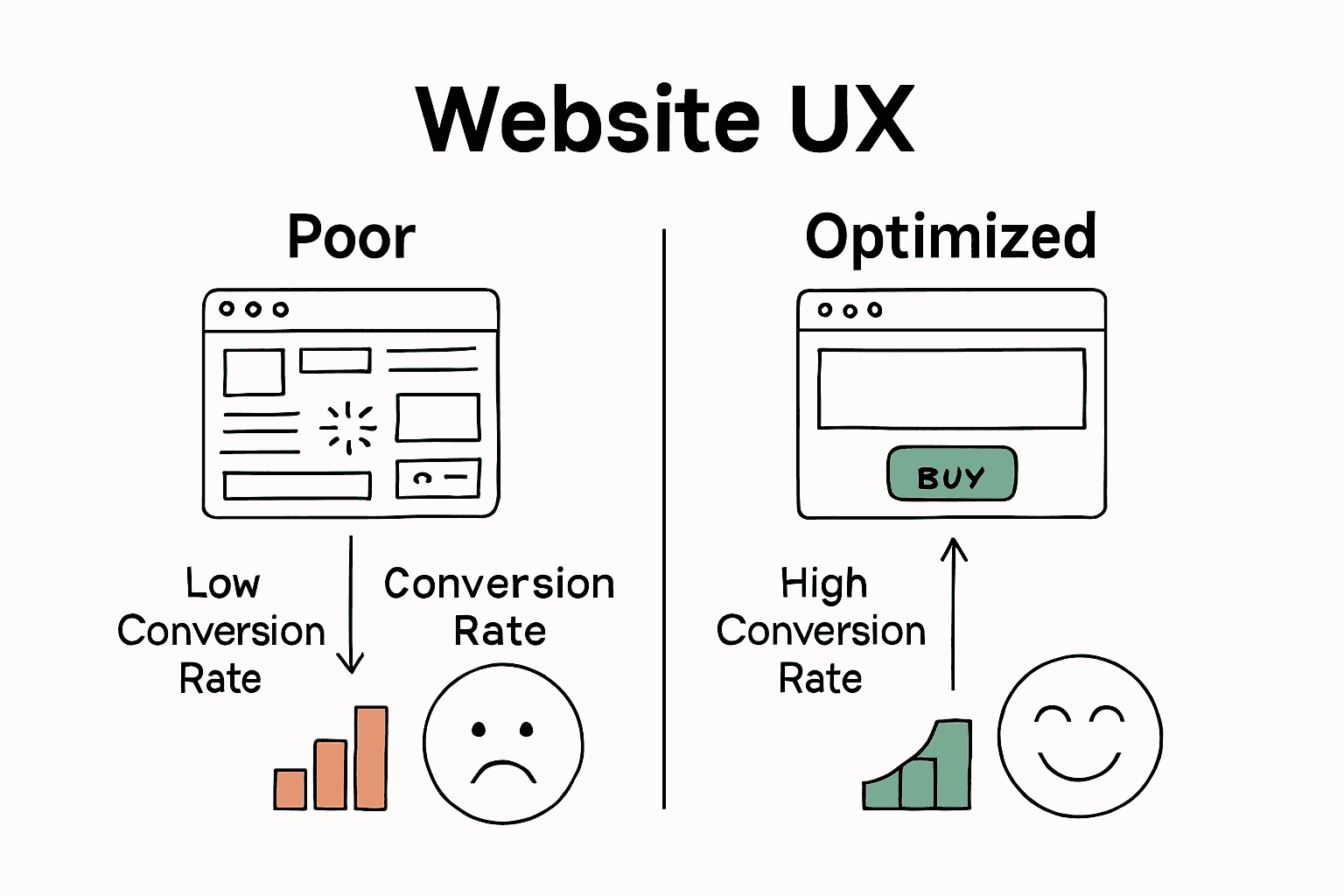
- Cluttered Interface: Overwhelming users with too much information or visual noise
- Inconsistent Navigation: Confusing site structures that frustrate user exploration
- Slow Loading Times: Performance issues that trigger immediate user abandonment
- Non-Responsive Design: Interfaces that fail across different devices and screen sizes
- Unclear Call-to-Action: Weak or ambiguous buttons that don't guide user behavior
By exploring common website usability issues and how to fix them, businesses can systematically identify and eliminate these conversion-killing mistakes. The most successful digital platforms recognize that exceptional user experience is not about perfection, but about continuously reducing friction and creating intuitive, seamless interactions.
Unlock Higher Conversion Rates with Precision UX Testing
Struggling to turn your website visitors into loyal customers because of UX hurdles like unclear navigation or slow loading times? The insights from the "UX and Conversion Rates: Complete Optimization Guide" reveal how critical user experience is in driving purchase behavior and increasing conversions. Key challenges such as cognitive fluency, clear calls-to-action, and responsive design demand constant refinement through data-driven strategies.
Stellar empowers marketers and growth hackers with an easy-to-use A/B Testing Tool designed to streamline these improvements quickly. With its no-code visual editor and real-time analytics, Stellar helps you test variations that reduce friction, enhance visual hierarchy, and boost perceived value. Whether you want to test new button placements or optimize page load speeds, Stellar’s lightweight and performance-focused platform ensures your UX changes never harm user experience.
Ready to transform your UX from guesswork into a science that directly drives conversions? Explore Stellar’s advanced goal tracking and dynamic keyword insertion features to start creating personalized, high-impact user journeys today. Don’t wait to make UX a strategic conversion tool—visit https://gostellar.app and begin your fastest path to better digital results now.
Frequently Asked Questions
How does user experience (UX) impact conversion rates?
User experience (UX) directly influences conversion rates by shaping how users interact with a website, guiding them towards completing desired actions like making a purchase or signing up for a service. A well-designed UX minimizes friction and enhances user satisfaction, leading to higher conversion rates.
What are the key elements of UX design that affect conversion?
Key elements include intuitive navigation, responsive design, visual hierarchy, performance optimization, and personalization. These factors create a seamless user journey that encourages engagement and increases the likelihood of conversion.
How can businesses use A/B testing to optimize UX?
Businesses can use A/B testing to compare two versions of a design, testing different elements like layout and call-to-action placement. This systematic approach helps identify which design better drives user behavior and improves conversion rates by making data-driven decisions.
What common UX mistakes should businesses avoid to enhance conversion rates?
Common mistakes include cluttered interfaces, inconsistent navigation, slow loading times, non-responsive design, and unclear call-to-action buttons. Avoiding these pitfalls helps create a more intuitive and engaging user experience that can lead to higher conversions.
Recommended
- Boost Your Ecommerce Conversion Rate: Proven Tactics for More Sales
- Comprendre l'expérience utilisateur web pour optimiser vos conversions
- How to Increase Conversions: 7 Proven Strategies for Success
- Website conversions : guide complet pour optimiser vos résultats
- Performance Marketing Process for Maximizing ROI Results - Click Thrive Marketing
- Top Copywriting Tips for Better Marketing Results
Published: 11/8/2025