
Top no-code A/B testing tools for e-commerce growth 2026
Choosing the right A/B testing tool can feel overwhelming when you need to balance speed, ease of use, and powerful features. E-commerce marketers know that even a 100ms delay in page load time can hurt conversions, yet many testing platforms add bloated scripts that slow your site. This guide cuts through the noise, comparing lightweight no-code A/B testing solutions designed specifically for small to medium-sized online stores that want faster experiments without sacrificing performance.
Table of Contents
- How To Choose The Right No-Code A/B Testing Tool
- 1. Stellar: Lightweight And Fast With Advanced Features
- 2. Google Optimize: Popular No-Code Tool With Integration Advantages
- 3. Optimizely: Enterprise-Grade But Heavier Script
- 4. VWO (Visual Website Optimizer): Balanced Features And Performance
- Summary Comparison: Key Metrics And Pricing
- Situational Recommendations: Best A/B Testing Tool For Your E-Commerce Needs
- Explore Streamlined A/B Testing With Stellar
Key takeaways
| Point | Details |
|---|---|
| Visual editors save time | No-code interfaces reduce setup time by up to 50% compared to coding-based tools. |
| Stellar leads in performance | At 5.4KB, Stellar delivers the lightest script with dynamic personalization and free plans for under 25,000 users. |
| Google Optimize suits budgets | Free integration with Google Analytics makes it ideal for cost-conscious teams, though personalization options are limited. |
| Optimizely offers power | Enterprise-grade features come with scripts exceeding 50KB and premium pricing, fitting complex needs. |
| VWO balances features | Mid-range pricing and a 25KB script provide comprehensive tracking without excessive performance costs. |
How to choose the right no-code A/B testing tool
Selecting an A/B testing platform starts with understanding what matters most for your e-commerce operation. The right tool should fit your technical skill level, site performance standards, budget constraints, and growth trajectory.
Ease of use sits at the top of most marketers' priority lists. No-code visual editor interfaces decrease setup time for digital marketers by up to 50% compared to coding-based tools, enabling faster experiment iterations. You can launch tests in minutes instead of waiting on developer resources. Look for drag-and-drop editors that let you modify headlines, images, buttons, and layouts without touching code.
Script size directly impacts your site's speed and user experience. Heavy testing scripts add precious milliseconds to page load times, which can increase bounce rates and tank conversion rates. Lightweight platforms maintain your site's performance while delivering testing capabilities. Always check the script footprint before committing to a tool.
Feature sets vary wildly across platforms. Dynamic personalization lets you customize landing pages based on traffic source or user behavior. Advanced analytics help you track micro-conversions and segment results by device or location. Real-time reporting speeds up decision-making. Prioritize features that align with your testing strategy rather than chasing bells and whistles you won't use.
Pricing structures range from free plans to enterprise contracts costing thousands monthly. Free tiers typically cap monthly visitors or tested users, making them perfect for startups and small businesses. Mid-tier plans offer more traffic capacity and unlock premium features. Match your selection to current traffic levels while considering growth projections for the next 12 months.
Scalability matters when planning for growth. A tool that works for 10,000 monthly visitors might buckle under 100,000. Review pricing jumps between tiers and assess whether upgrading paths make financial sense as your store expands.
Pro Tip: Start with a platform offering a generous free tier. Run three to five experiments to evaluate the interface and features before committing to paid plans.
1. Stellar: lightweight and fast with advanced features
Stellar stands out for e-commerce teams obsessed with site speed and quick deployment. The platform's 5.4KB script size makes it the lightest option available, ensuring your A/B tests add virtually no performance drag to your pages.

The visual no-code editor eliminates technical bottlenecks. You can modify any page element through point-and-click controls, from product images to checkout button colors. Tests launch in minutes, not days. The interface feels intuitive even for first-time users, reducing onboarding time to under an hour.
Dynamic keyword insertion transforms generic landing pages into personalized experiences. When visitors arrive from paid search, Stellar automatically populates headlines and copy with their exact search terms. This relevance boost typically lifts conversion rates by 15% to 25% in e-commerce contexts. You can create template pages that adapt to dozens of keyword variations without building separate versions.
Advanced goal tracking goes beyond simple conversion monitoring. Set up funnel analytics to identify where users drop off. Track micro-conversions like video plays, scroll depth, or add-to-cart actions. Segment results by device type, geography, or traffic source to uncover hidden patterns.
The free plan supports businesses with under 25,000 monthly tracked users, making Stellar accessible for bootstrapped startups and growing SMBs. Paid tiers scale affordably as traffic increases. Real-time analytics dashboards update every few seconds, letting you spot winning variations early and stop underperforming tests quickly.
Stellar excels for teams prioritizing speed, simplicity, and performance. If your e-commerce site serves price-sensitive customers who abandon slow-loading pages, the minimal script overhead becomes a competitive advantage. The platform delivers enterprise-grade personalization without enterprise complexity or cost.
Pro Tip: Use Stellar's dynamic keyword insertion for all paid search campaigns. The personalization boost typically pays for the tool within the first month.
2. Google Optimize: popular no-code tool with integration advantages
Google Optimize earned popularity through seamless integration with the Google ecosystem and zero-cost entry. User satisfaction ratings consistently exceed 85%, driven by familiarity and ease of access for teams already using Google Analytics.
The tight connection to Google Analytics simplifies experiment setup and reporting. You can import Analytics audiences directly into Optimize, targeting tests to specific user segments without manual configuration. Conversion goals sync automatically. Results appear alongside your standard traffic reports, eliminating platform-switching friction.
The free plan provides essential A/B testing capabilities suitable for budget-conscious marketers. You get basic split testing, multivariate testing, and redirect tests. The visual editor handles most common page modifications without coding knowledge. Small teams can run unlimited experiments on unlimited pages, making it financially attractive for lean operations.
However, dynamic personalization features lag behind competitors. Google Optimize lacks native keyword insertion or advanced targeting based on referral source. You can segment by basic demographics and behavior, but granular personalization requires workarounds or custom coding. This limitation matters most for e-commerce businesses running diverse traffic sources or sophisticated funnel strategies.
The platform works best for Google Analytics power users operating within tight budgets. If your team already relies on GA for insights and you need straightforward A/B testing without frills, Optimize delivers solid value. Just recognize the personalization trade-offs compared to specialized tools.
Integration advantages create lock-in effects. Once your testing workflow depends on Google Analytics audiences and goals, switching platforms requires rebuilding that infrastructure. Weigh this dependency against future needs before committing.
3. Optimizely: enterprise-grade but heavier script
Optimizely brings enterprise-level experimentation capabilities to businesses willing to accept performance trade-offs and premium pricing. The platform's script size exceeds 50KB, potentially adding noticeable load time to pages, especially on mobile connections.
Highly customizable experiments separate Optimizely from simpler tools. You can build complex multivariate tests examining dozens of element combinations simultaneously. Advanced targeting rules let you serve different experiences based on intricate visitor profiles. The platform supports full-stack testing across web, mobile apps, and backend systems, enabling coordinated experiments across your entire customer journey.
Robust analytics provide granular insights that simple conversion tracking misses. Statistical significance calculations run automatically, preventing premature decisions. Bayesian statistics options give you probabilistic confidence estimates. Segment explorer tools let you slice results by virtually any visitor attribute, uncovering subgroup effects that aggregate data hides.
The feature depth comes at a cost. Premium pricing starts at several hundred dollars monthly for modest traffic levels, scaling into thousands for high-volume sites. This investment makes sense for established e-commerce operations with complex testing needs and dedicated optimization budgets. Smaller businesses often find the cost hard to justify.
Performance impact from the large script deserves careful consideration. Each kilobyte added to page weight increases load times, particularly for mobile users on slower connections. Run lighthouse audits before and after implementation to quantify the speed penalty. If your conversion funnel shows high mobile sensitivity, the script overhead might offset testing gains.
Optimizely fits SMBs with sophisticated requirements and resources to match. Companies running dozens of concurrent experiments, coordinating tests across multiple platforms, or needing enterprise support and compliance features will appreciate the capabilities. Budget-constrained teams focused on core A/B testing should explore lighter alternatives.
4. VWO (Visual Website Optimizer): balanced features and performance
VWO positions itself in the middle ground between lightweight simplicity and enterprise complexity. The approximately 25KB script balances functionality with acceptable page load impact, making it suitable for growth-oriented SMBs unwilling to sacrifice either performance or features.
The visual editor includes light coding options for teams with technical resources. Most changes happen through drag-and-drop controls, but you can inject custom CSS or JavaScript when needed. This flexibility accommodates both pure marketers and hybrid teams with developer support. The editor handles responsive design well, previewing changes across device sizes.
Comprehensive tracking and goal measurement rival enterprise platforms. VWO supports multiple goal types including clicks, form submissions, revenue, and custom events. Heatmaps and session recordings complement A/B test data, helping you understand why variations win or lose. The analytics dashboard presents results clearly without requiring statistics expertise.
Mid-range pricing makes VWO accessible to growing SMB teams ready to graduate from free tools. Plans typically start around $200 monthly for moderate traffic, scaling based on tested visitors. The cost sits between free options like Google Optimize and premium solutions like Optimizely. You get significant capabilities without breaking the bank.
VWO serves businesses seeking feature-versus-performance trade-offs. If Stellar feels too minimal and Optimizely too heavy, VWO likely fits your needs. The platform works well for e-commerce optimization projects requiring both solid analytics and reasonable site speed.
| Feature | Stellar | Google Optimize | Optimizely | VWO |
|---|---|---|---|---|
| Script Size | 5.4KB | ~35KB | 50KB+ | ~25KB |
| Visual Editor | Yes | Yes | Yes | Yes |
| Personalization | Dynamic keywords | Basic | Advanced | Moderate |
| Free Plan | Under 25K users | Yes | No | Trial only |
Summary comparison: key metrics and pricing
Script size differences create meaningful performance gaps. Stellar's 5.4KB footprint delivers the fastest load times, adding negligible overhead even on slow mobile connections. Google Optimize and VWO sit in the middle with 25-35KB scripts that introduce modest delays. Optimizely's 50KB+ script can noticeably impact page speed, particularly when combined with other third-party tools.
All four platforms offer no-code visual editors, but capabilities vary. Stellar and VWO provide the most polished editing experiences with robust preview modes. Google Optimize delivers solid basics but lacks advanced customization. Optimizely offers the most powerful editor with complex targeting rules, though the learning curve steepens accordingly.
Dynamic personalization separates premium tools from basic options. Stellar's keyword insertion and advanced targeting enable sophisticated personalization without coding. Optimizely matches these capabilities but requires technical setup. VWO offers moderate personalization features suitable for most use cases. Google Optimize lags here, providing only basic audience targeting.
User satisfaction metrics favor familiar tools. Google Optimize scores above 85% thanks to Google brand trust and Analytics integration. Stellar earns high marks for speed and simplicity. Optimizely and VWO receive praise for features but face criticism over complexity and cost respectively.
Pricing structures span the full spectrum. Google Optimize remains free, making it unbeatable for zero-budget teams. Stellar offers generous free tiers and affordable paid plans starting under $100 monthly. VWO pricing begins around $200 monthly for growing businesses. Optimizely commands premium rates starting at $300+ monthly, scaling into enterprise territory. Choose based on your traffic volume, feature requirements, and performance priorities.
Situational recommendations: best A/B testing tool for your e-commerce needs
Your ideal A/B testing platform depends on specific business circumstances and priorities. Match your selection to these common scenarios.
-
Choose Stellar for ultra-lightweight performance needs. If site speed directly impacts your conversion rates or you serve mobile-heavy traffic, the 5.4KB script eliminates performance concerns. The free plan works for stores under 25,000 monthly visitors. Dynamic keyword insertion adds personalization power that typically costs more elsewhere.
-
Opt for Google Optimize when budget constraints dominate. Zero cost makes Optimize perfect for bootstrapped startups or teams with minimal testing budgets. The Google Analytics integration saves setup time if you already rely on GA. Accept the personalization limitations as the price of free access.
-
Select Optimizely for complex, highly customizable experiments. Large product catalogs, sophisticated segmentation needs, or multi-platform testing justify the investment. You need dedicated optimization resources to extract full value. The performance cost matters less if your audience tolerates slightly slower load times.
-
Pick VWO to balance features, performance, and moderate costs. Growing SMBs ready to invest in testing but unwilling to compromise site speed find VWO's middle ground appealing. The comprehensive analytics and reasonable pricing create solid value for teams running regular optimization programs.
-
Consider site speed, budget, and experiment complexity as primary decision drivers. Prioritize performance if analytics show bounce rate sensitivity to load times. Let budget dictate when funding is tight. Choose feature-rich platforms only when testing sophistication genuinely impacts growth strategies. Most SMB e-commerce operations succeed with lightweight, focused tools rather than enterprise complexity.
Review your analytics to identify which factors matter most. High mobile traffic demands lighter scripts. Complex funnels justify advanced features. Limited resources favor free or affordable options. Your specific mix of constraints points toward the optimal choice.
Explore streamlined A/B testing with Stellar
Ready to start testing without slowing your site? Stellar combines the performance you need with the features you want, all wrapped in a no-code interface that gets experiments running in minutes.
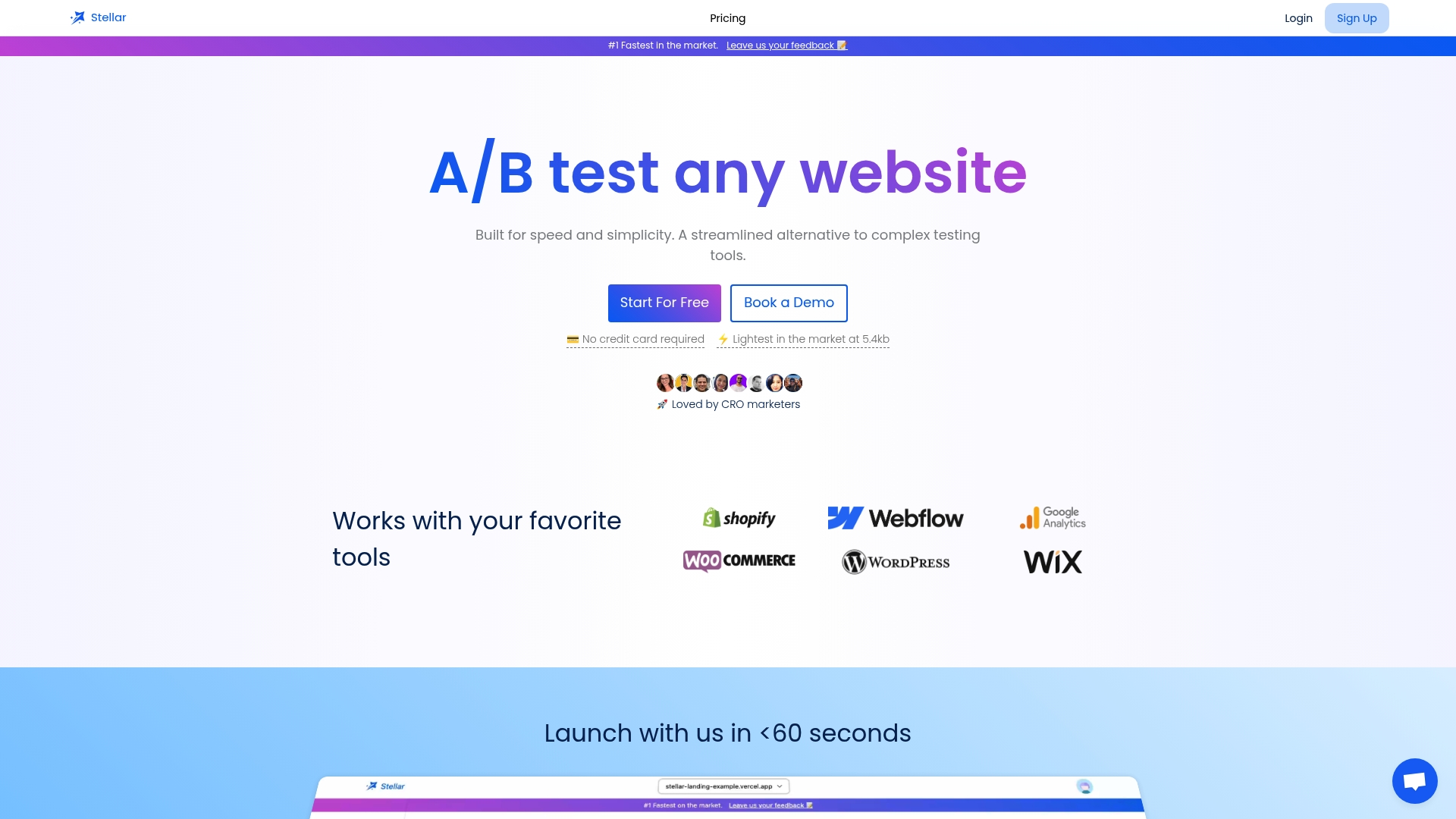
The free plan supports up to 25,000 monthly tracked users, giving growing e-commerce stores room to experiment without upfront costs. Visual editors eliminate technical bottlenecks, letting marketers launch tests independently. The 5.4KB script keeps your pages lightning-fast even during active experiments. Dynamic keyword insertion personalizes landing pages automatically, typically boosting conversion rates by 15% to 25%.
SMB e-commerce marketers consistently choose Stellar when prioritizing both performance and usability. The platform scales affordably as traffic grows, with transparent pricing that matches real business needs. Try it free and see how faster testing drives faster growth.
FAQ
What is a no-code A/B testing tool?
A no-code A/B testing tool lets marketers run split tests without coding knowledge, using visual editors to change site elements easily. You can modify headlines, images, buttons, and layouts through drag-and-drop interfaces. This independence eliminates waiting for developer resources and speeds up experimentation cycles significantly.
How does script size affect my e-commerce site's performance?
Larger testing scripts slow page load times, potentially increasing bounce rates and reducing conversions, so lighter scripts maintain better site speed. Every added kilobyte delays rendering, especially on mobile connections. Research shows even 100ms delays can hurt conversion rates, making script footprint a critical selection factor for performance-sensitive e-commerce sites.
Can I use A/B testing tools without coding skills?
Yes, no-code tools provide visual editors and templates so marketers can run tests independently without developer support. Point-and-click interfaces handle most common page modifications. You can launch experiments, analyze results, and implement winners entirely through browser-based dashboards without touching code.
What pricing options are available for SMBs?
Many tools offer free or entry-level plans supporting up to 25,000 users. Paid tiers range from around $50 to over $200 monthly depending on traffic and features. Premium enterprise platforms can cost thousands monthly for high-volume sites. Selecting the right plan depends on your business size, monthly visitor count, and growth projections. Start with free tool benefits to test capabilities before committing to paid tiers.
Recommended
- A/B Testing for Ecommerce: Strategies and Trends for 2025
- Top 10 A/B Testing Platforms for 2025: Find the Best Web A/B Testing Tool for You
- The Ultimate Guide to eCommerce Optimization
- De beste no-code a/b testing tools – Expertvergelijking 2025
- E-commerce Growth Through Multilingual Localisation | Glocco
- Why shop beachwear online in 2026: 42% growth & eco perks – Le Club Original
Published: 3/8/2026